Hungary's Pivotal Election: Orbán Faces Strongest Challenge in 16 Years
Hungarians flocked to polling stations across the nation on Sunday, April 12, 2026, casting ballots in what observers widely regard as Europe's most consequential election this year. This pivotal vote presents the first serious threat to unseat populist Prime Minister Viktor Orbán after his remarkable 16-year tenure in power. The election outcome carries profound implications not only for Hungary but for the broader European political landscape and global alliances.
A Defining Moment for Europe's Longest-Serving Leader
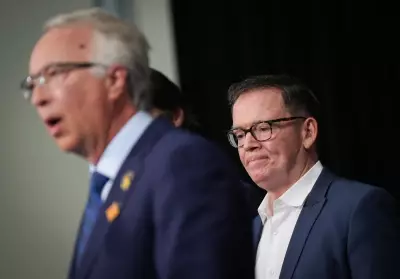
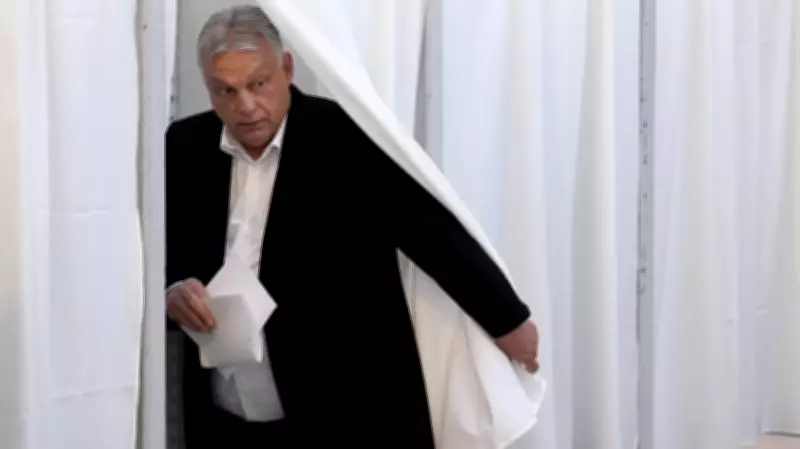
Viktor Orbán, the European Union's longest-serving leader and one of its most controversial figures, arrived at a Budapest polling station alongside his primary challenger, Péter Magyar, who appeared at a separate location nearly simultaneously. Orbán, 62, told reporters outside his polling place that the campaign represented "a great national moment on our side" and expressed gratitude to activists and supporters. "I'm here to win," he declared confidently.
Orbán's political journey has been extraordinary—from his early days as a liberal, anti-Soviet activist to his current position as a Russia-friendly nationalist admired by far-right movements worldwide. His steady drift away from Western partners toward Russian President Vladimir Putin has frustrated and alarmed many European Union leaders. Recent revelations that a top member of his government frequently shared EU discussion contents with Moscow have raised serious accusations that Hungary has been acting on Russia's behalf within the bloc.

Record Turnout and High Stakes
Polls opened at 6 a.m. and were scheduled to close at 7 p.m. across Hungary. The National Election Office reported that turnout reached 66% after just five hours of voting—a record in Hungary's post-communist history. Approximately 900,000 more voters had cast ballots by 3 p.m. compared to the 2022 elections, indicating extraordinary public engagement.
Marcell Mehringer, a 21-year-old voter in Budapest, explained his motivation: "I'm voting primarily so that Hungary will finally be a so-called European country, and so that young people, and really everyone, will do their fundamental civic duty to unite this nation a bit and to break down these boundaries borne of hatred."
The Challenger's Rise and Message
Péter Magyar, the 45-year-old leader of the center-right Tisza party, has rapidly emerged as Orbán's most formidable opponent. After casting his vote, Magyar told reporters that the election represented "a choice between East or West, propaganda or honest public discourse, corruption or clean public life." He urged all Hungarian citizens to exercise their voting rights.
A former insider within Orbán's Fidesz party, Magyar broke with the organization in 2024 and quickly formed Tisza. Since then, he has toured Hungary relentlessly, holding rallies in settlements both large and small, sometimes visiting up to six towns daily in a vigorous campaign blitz. Magyar's platform focuses on issues affecting ordinary voters, including Hungary's faltering public healthcare and transportation sectors, along with what he describes as rampant government corruption.
Orbán's Controversial Legacy
During his 16 years as prime minister, Orbán has launched harsh crackdowns on minority rights and media freedoms, subverted many of Hungary's democratic institutions, and faced accusations of siphoning large sums of money to his allied business elite—allegations he consistently denies. He has also heavily strained Hungary's relationship with the European Union, frequently using his veto power to stymie important decisions within the 27-member bloc.
Most recently, Orbán blocked a 90-billion euro ($104 billion) EU loan to Ukraine, prompting his European partners to accuse him of hijacking critical aid. Despite winning four consecutive elections with a two-thirds parliamentary majority for his party, signs have emerged that Orbán's absolute control over Hungary's politics may be reaching its conclusion.

International Scrutiny and Allegations
The election has drawn intense international attention, reflecting Orbán's outsize role in far-right populist politics worldwide. Members of Donald Trump's "Make America Great Again" movement view Orbán's government and his Fidesz party as shining examples of conservative, anti-globalist politics in action. Meanwhile, advocates of liberal democracy and the rule of law revile his administration.
Across the Atlantic, Trump has repeatedly endorsed the Hungarian leader, and U.S. Vice President JD Vance made a two-day visit to Hungary last week aimed at helping push Orbán over the finish line. Conversely, many in the European Union who perceive Orbán as a danger to the bloc's future hope for his defeat and anticipate that a new Hungarian government under Magyar would prove a better partner.
Challenges and Allegations of Interference
Magyar and Tisza face a formidable battle against Orbán's political machinery. Orbán's control of Hungary's public media—transformed into a mouthpiece for his party—along with vast swaths of the private media market gives him a significant advantage in spreading his message. Additionally, unilateral transformations of Hungary's electoral system and gerrymandering of its 106 voting districts by Fidesz will require Tisza to gain an estimated 5% more votes than Orbán's party to achieve a simple majority.
Hundreds of thousands of ethnic Hungarians in neighboring countries possess voting rights in Hungarian elections and traditionally vote overwhelmingly for Orbán's party. Both Fidesz and Tisza have launched platforms for reporting irregularities, accusing their opponents of planning election abuses. Numerous media reports, including by The Washington Post, indicate that Russian secret services have plotted to interfere and tip the election in Orbán's favor. The prime minister has countered by accusing neighboring Ukraine, as well as Hungary's EU allies, of seeking to interfere to install a "pro-Ukraine" government.
As Hungarians await the election results, the world watches closely, recognizing that this vote could reshape not only Hungary's political landscape but also its position within Europe and its relationships with global powers. The outcome will determine whether Hungary continues its drift toward Russia under Orbán or reclaims its place among Europe's democratic societies under new leadership.