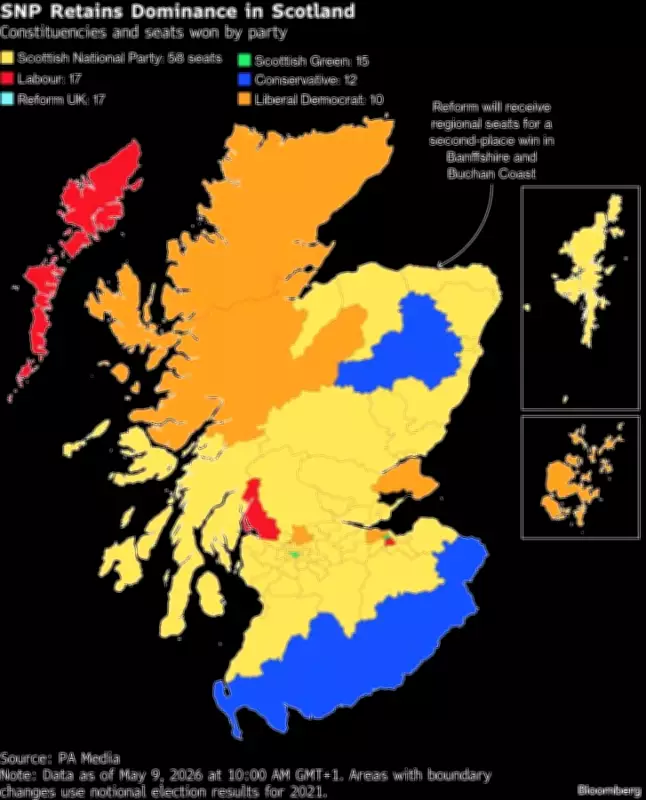
Scotland's drive for another independence referendum could be reignited after nationalists dominated the country's devolved parliament following an election that saw a collapse in support for Britain's two traditional parties of power.
SNP wins fifth consecutive term
The Scottish National Party secured a fifth straight term leading the semi-autonomous government in Edinburgh on Friday, although it failed to achieve an outright majority in the legislature. However, record support for the Greens, who also advocate for Scotland to leave the UK, means the two parties together hold more than half of the 129 seats.
Ross Greer, co-leader of the Scottish Greens, told BBC Scotland: "We know independence is urgently needed and we have a democratic mandate to pursue that cause. The people of this country should get the opportunity to decide at a referendum whether Scotland should be an independent nation again and be able to join the European Union."

Pressure on UK Prime Minister
The result intensifies pressure on Prime Minister Keir Starmer after his governing Labour Party suffered significant losses due to a series of policy U-turns, scandals, and missteps. The UK premier now faces nationalist governments across the country's devolved nations in Scotland, Wales, and Northern Ireland.
Northern Ireland's First Minister Michelle O'Neill, an Irish nationalist from Sinn Fein, posted on X: "More and more people are looking towards a future beyond the constraints of the Union. Their growing demand for independence cannot be ignored."
Populist surge
Labour lost control of Wales for the first time in a century to the pro-independence Plaid Cymru, while in England it shed hundreds of local council seats to Nigel Farage's populist Reform UK. In Scotland, Reform won its first parliamentary seats as voters deserted the Conservative Party, which governed the UK for 14 years before being ousted by Labour. The leader of the Scottish Conservatives blamed Reform for splitting the anti-independence vote and handing gains to the SNP.
SNP leader's stance
SNP leader John Swinney, who also serves as the leader of the Scottish government, previously stated he would push for another vote on Scottish autonomy if his party won an outright majority. As results showed the SNP falling short, he prevaricated on whether he would take the case to Westminster.
Nicola McEwen, a public policy professor at the University of Glasgow, said: "The SNP will do what they can to advance the cause of independence because it's in their DNA. I expect a symbolic vote to demonstrate that there is a pro-independence majority in the early days of the new government."
The SNP's victory means the party is set to extend its time in power in Scotland to more than two decades, marking a notable reversal of fortunes over the past two years.