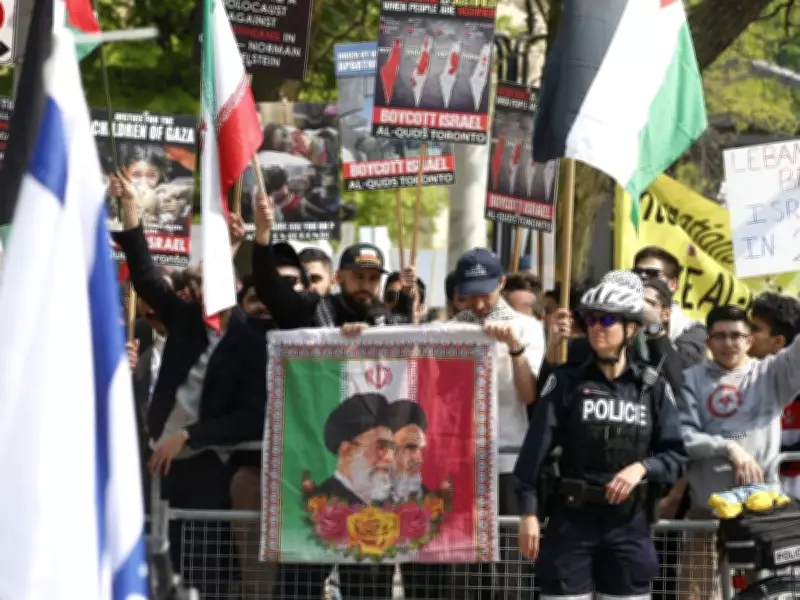
In a contentious move, Toronto is set to host the Al-Quds Day rally this Saturday, March 14, 2026, at the U.S. consulate on University Avenue. This decision comes despite a series of recent shootings linked to the war in Iran, which have targeted synagogues, a Jewish-owned restaurant, and an Iranian-Canadian boxing gym, with over 50 bullets fired and no arrests made to date.
Recent Violence and Safety Concerns
Over the past month, three synagogues in the Greater Toronto Area have been attacked, resulting in an estimated 30 bullet holes in windows, walls, and doors. Additionally, a Jewish-owned restaurant and a boxing gym owned by an Iranian-Canadian critical of the Islamic Revolutionary Guard Corps (IRGC) were hit with 17 bullets. The U.S. consulate itself was struck with multiple gunshots, heightening fears of further violence.
Authorities' Response and Public Outcry
Toronto Police have announced plans for a "significant and visible presence" downtown, with Supt. Craig Young of Emergency Management and Public Order providing an update on operational planning. However, critics question why the rally hasn't been cancelled, especially after similar events were halted in the U.K. due to safety risks.

Noah Shack, CEO of the Centre for Israel and Jewish Affairs (CIJA), emphasized, "In this dangerous environment, Canadian authorities must use every tool available to ensure public safety and protect the public from harm." Simon Wolle of B’nai Brith Canada added that the shootings underscore a climate of antisemitism, calling for immediate action to protect Jewish communities.
Political and Legal Stances
Ontario Solicitor General Michael Kerzner stated that antisemitism and glorification of terrorist groups are unacceptable, vowing to hold perpetrators accountable. Yet, there's skepticism about enforcement, given past instances where charges related to hate crimes were dismissed in courts.
The City of Toronto has not confirmed if a permit was issued for the protest, raising questions about why blocking a hospital zone roadway is tolerated. Critics argue that if parking violations face zero tolerance, protests at diplomatic offices should be similarly restricted to public squares or parks.
Broader Implications and Community Reactions
Al-Quds Day, established in 1979 by Iran's Supreme Leader, is seen by many as a platform for hate and antisemitism, with CIJA reporting up to 700 individuals linked to the Iranian regime possibly in Canada. The rally's timing, following multiple terror attacks, has sparked debates over public safety and the need for stronger leadership.
As Toronto braces for the event, community leaders urge authorities to prioritize safety over protest rights, highlighting the delicate balance between free expression and preventing violence in a tense geopolitical climate.