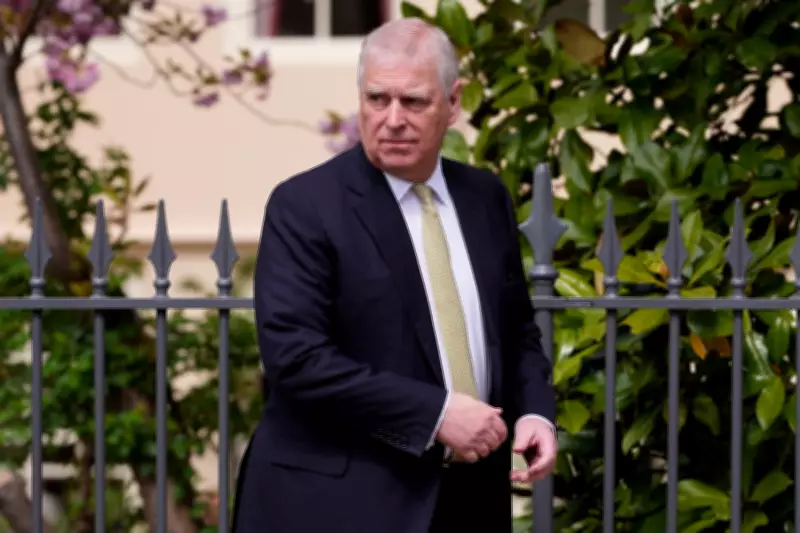
Mark Carney Calls for Removal of Andrew Mountbatten-Windsor from Royal Succession
In a significant intervention into royal affairs, former Bank of England Governor Mark Carney has publicly advocated for the removal of Andrew Mountbatten-Windsor from the British line of succession. The controversial statement comes amidst ongoing scrutiny of the royal's conduct and associations.
Background of the Controversial Figure
Andrew Mountbatten-Windsor, formerly known as Prince Andrew, has faced numerous controversies in recent years, including his association with convicted sex offender Jeffrey Epstein and a settled civil sexual assault case. Despite stepping back from royal duties in 2019, he remains eighth in line to the British throne, a position Carney believes should be reconsidered.
The former central banker, who served as Governor of the Bank of England from 2013 to 2020, made his comments during a discussion about institutional accountability and public trust. Carney emphasized that modern monarchies must maintain the highest standards of conduct among those in line for the throne.

Institutional Integrity and Public Perception
Carney argued that maintaining Andrew Mountbatten-Windsor in the succession line damages the monarchy's credibility and contradicts principles of accountability that modern institutions should uphold. His comments represent a rare instance of a prominent financial figure weighing in on royal constitutional matters.
The former governor noted that while the succession order is established by law, mechanisms exist for Parliament to amend the line of succession, as demonstrated in 2013 when male-preference primogeniture was abolished. Carney suggested similar legislative action could address what he views as an untenable situation.
Historical Context and Constitutional Considerations
The British line of succession has undergone several modifications throughout history, most recently with the 2013 Perth Agreement that ended male preference and removed disqualification for marrying Roman Catholics. However, removing someone from the succession entirely would require parliamentary action and potentially raise complex constitutional questions.
Royal commentators note that while the monarch has limited personal power to alter the succession, Parliament could theoretically pass legislation to exclude specific individuals, though such action would be unprecedented in modern times for reasons unrelated to religion or marriage.
Broader Implications for the Monarchy
Carney's intervention comes at a sensitive time for the British royal family, which has faced numerous challenges in recent years including:
- Ongoing public scrutiny of Andrew Mountbatten-Windsor's associations and conduct
- Health concerns regarding King Charles III and Catherine, Princess of Wales
- Continued adjustments following the departure of Prince Harry and Meghan Markle from senior royal duties
- Questions about the monarchy's role in contemporary British society
The former governor's comments have sparked debate about whether financial and institutional leaders should involve themselves in royal matters, and whether the criteria for succession should extend beyond mere birthright to include considerations of character and public service.
As the royal family navigates these complex issues, Carney's unexpected intervention adds another dimension to the ongoing discussion about the monarchy's future in twenty-first century Britain.