Online Misinformation Distorts PM Carney's NATO Remarks at Davos Forum
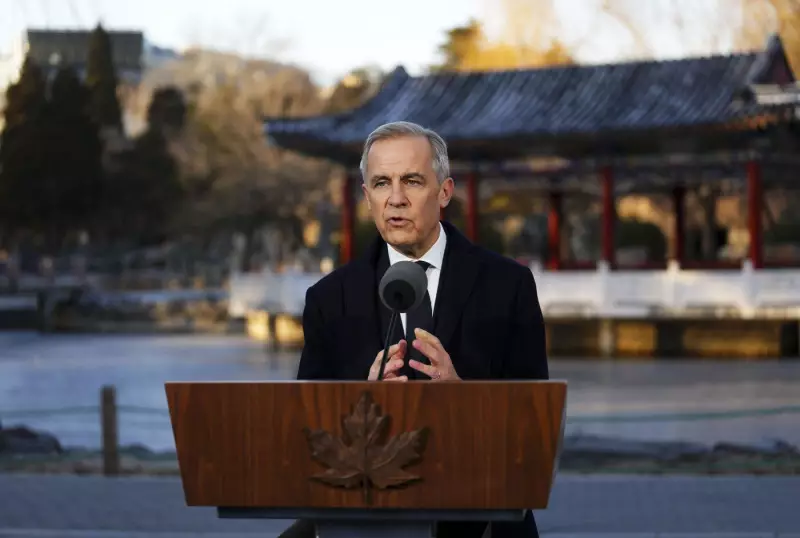
Prime Minister Mark Carney's address to the World Economic Forum in Davos has become the center of a viral misinformation campaign, with his comments on NATO and international cooperation being grossly misconstrued online as a declaration of war. The full context of his speech reveals a starkly different narrative, one focused on diplomatic solidarity and strategic alliances.
Clarifying the Prime Minister's Actual Statements
In his comprehensive speech, Carney emphasized Canada's unwavering support for Greenland, highlighting the importance of middle powers collaborating on global challenges. He articulated a vision where nations like Canada and Greenland work together to enhance security and economic stability, particularly in the face of rising geopolitical tensions. The Prime Minister's remarks were a call for strengthened multilateralism, not military aggression.
This distortion underscores the rapid spread of false narratives in the digital age, where complex diplomatic language can be stripped of nuance and repurposed to fuel sensationalist claims. Analysts note that such misinterpretations often gain traction during periods of international uncertainty, exploiting public anxiety for clicks and engagement.

The Broader Context of Canada's Foreign Policy Stance
Carney's Davos appearance comes at a critical juncture for Canadian foreign policy. His speech aligns with ongoing efforts to position Canada as a reliable partner in NATO and other international frameworks. The focus on Greenland reflects strategic interests in the Arctic region, where climate change and resource development are reshaping geopolitical dynamics.
Experts point out that middle-power diplomacy, as championed by Carney, is increasingly vital in a multipolar world. By fostering cooperation among like-minded nations, Canada aims to amplify its influence on issues ranging from security to environmental stewardship. This approach contrasts sharply with the isolationist rhetoric emerging from some quarters, notably former U.S. President Donald Trump's recent comments targeting Canada.
Addressing the Fallout from Online Misinformation
The propagation of false claims about Carney's speech highlights the persistent challenge of combating digital misinformation. Government officials and fact-checking organizations have been quick to debunk the war declaration narrative, but the episode serves as a reminder of the vulnerability of public discourse to manipulation.
Key takeaways from this incident include:
- The need for media literacy initiatives to help citizens critically evaluate online content.
- The importance of official channels providing clear, accessible summaries of complex policy statements.
- The role of social media platforms in curbing the spread of demonstrably false information.
As Canada navigates an increasingly volatile global landscape, the clarity and integrity of its diplomatic communications will be paramount. Carney's Davos address, when understood in full, reinforces a commitment to peaceful cooperation—a message that deserves to be heard above the noise of online distortion.