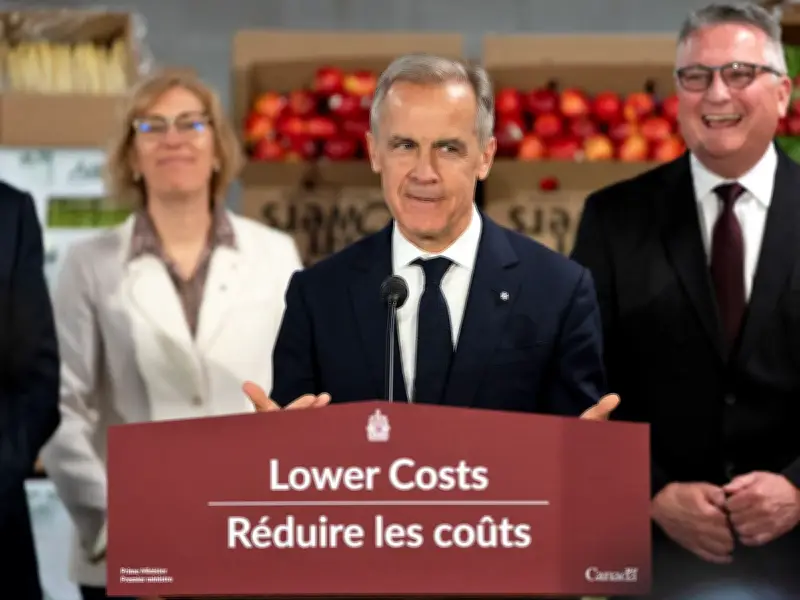
Prime Minister Mark Carney has overseen the publication of six lengthy, high-production 'strategic plans' in 2026, covering topics from food security to nuclear energy. Critics argue these documents read like campaign platforms—filled with ambitious visions but short on specifics.
Nuclear Energy Strategy
The Nuclear Energy Strategy, released earlier this year, marked a shift from the Trudeau government's focus on solar and wind. It pledges to 'enable construction of up to ten new large-scale reactors within Canada' and 'double uranium exports from 2024 to 2035.' The uranium sector welcomed the plan, saying it clarified federal support. However, the strategy also includes reconciliation language, aiming to 'increase meaningful Indigenous participation in nuclear projects, including equity partnerships and capacity-building.'
National Food Security Strategy
Released on June 11, just before Statistics Canada confirmed groceries were rising in price faster than any other commodity, the 27-page strategy restates the problem: 'Canada's future food security will be based on our ability to build a system where food is more affordable.' It notes rising prices are 'making it harder for many Canadians and their families to access sufficient nutritious food at an affordable price.' The strategy's recommendations are vague: 'More choice' and 'more control,' concluding 'Greater choice and control will mean More Canada.'

AI Strategy and Other Plans
The government also released an AI strategy, which Conservatives and NDP criticized as missing the mark for nervous Canadians. Other plans cover nature, housing, and clean energy. According to Tristin Hopper, 'The easy criticism of the trend is that the strategies all read like campaign platforms. They're filled with grand visions of the future, but are often very short on specifics.' Supporters argue that signaling a 'strategic vision' can be valuable, as with the nuclear strategy aiding the uranium sector.
Impact and Criticism
Despite the flurry of documents, results remain scarce. The strategies often include ambitious targets—such as ten new reactors—but lack clear timelines or funding. Critics say this undermines confidence in the government's ability to deliver. As one observer noted, 'It's all bold language and no action.' The trend has sparked debate about whether strategic plans are a useful governance tool or merely political theater.