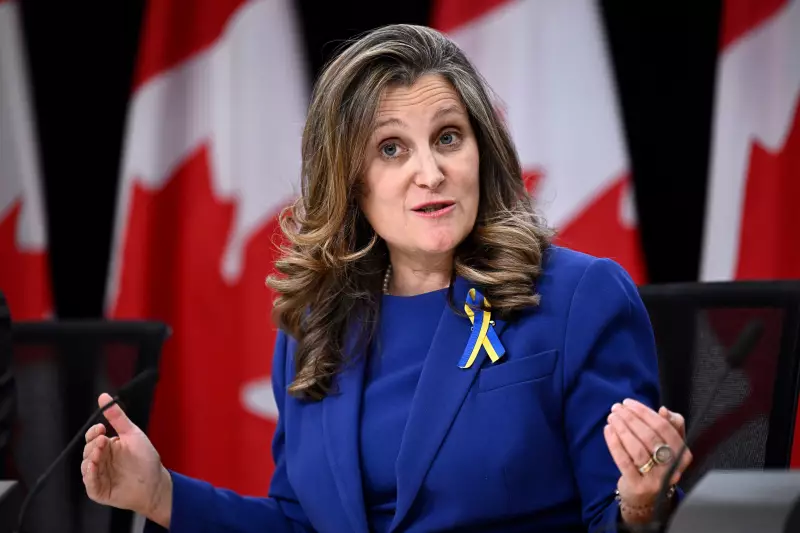
Deputy Prime Minister Chrystia Freeland has confirmed she will step down from her role as a Member of Parliament this Friday, January 9, 2026. The announcement, made on January 7, 2026, follows a period of intense political pressure from opposition parties in the House of Commons.
A Sudden Exit from Parliament
The decision marks a significant shift in the federal political landscape. Freeland, who also serves as the country's Deputy Prime Minister, will formally tender her resignation from her parliamentary seat. The news was first reported on the evening of January 7, 2026, with official confirmation coming shortly after.
While the announcement was sudden, it did not occur in a vacuum. Opposition parties have been applying consistent and public pressure on the high-profile minister for months, scrutinizing her policies and political decisions. This culminated in the revelation that she would vacate her seat, a move that will trigger a by-election in her riding.

The Context of Opposition Pressure
Freeland's tenure as a senior cabinet minister has been marked by both significant policy achievements and contentious debates. Her roles in overseeing economic policy and serving as a key figure in the government's front bench made her a frequent target for opposition criticism.
The specific nature of the pressure that led to her resignation involves sustained attacks on her handling of key files and her political judgment. The opposition's strategy of focusing criticism on prominent government figures appears to have contributed directly to this outcome. Her departure is set for Friday, January 9, 2026, just two days after the public announcement.
Implications for the Government and Future Politics
Freeland's resignation as an MP raises immediate questions about the stability of the current government and its leadership team. While she may retain her cabinet position for a limited time without a seat, constitutional convention requires ministers to be sitting MPs or senators, setting the stage for a broader cabinet shuffle or a strategic recalibration.
Furthermore, her exit creates a vacancy that will need to be filled through a by-election, testing the government's popularity in what will be viewed as a crucial mid-mandate bellwether. The coming days will reveal whether other political figures will follow suit or if this event will mark a pivotal moment in the current parliamentary session. The focus now turns to who will succeed her in representing her constituents and how the governing party will manage this high-profile departure.