Foreign Minister Avoids Legal Assessment of Military Action Against Iran
Canadian Foreign Minister Anita Anand has declined to publicly state whether the Canadian government considers recent military strikes on Iran by the United States and Israel to be legal under international law. This refusal to comment comes amidst escalating tensions in the Middle East following the killing of Iran's supreme leader and subsequent retaliatory actions by groups like Hezbollah.
Diplomatic Caution Amid Global Escalation
The minister's reticence was noted during a period of significant international upheaval. While Canadian police authorities have stated there is no 'imminent threat' to Canada directly from the fallout of these attacks, security measures have been heightened. Police are stepping up patrols around places of worship and certain organizations across the country as a precautionary measure.
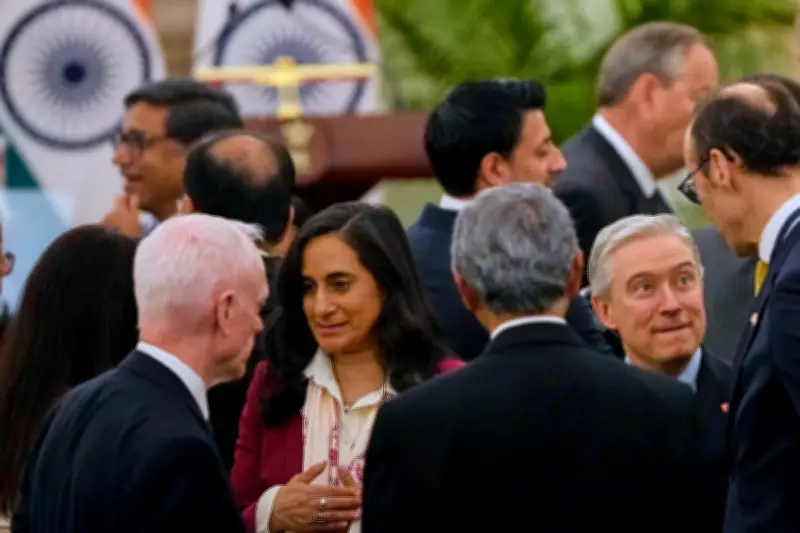
Anand's position reflects a careful diplomatic balancing act. The government is navigating complex alliances and international legal frameworks without explicitly endorsing or condemning the actions of key partners. This stance occurs while other global events unfold, including Anand's recent diplomatic engagements, such as her presence alongside Finance Minister François-Philippe Champagne at agreement signings in New Delhi, India.

Domestic Reactions and Broader Context
The military action has sparked varied reactions within Canada. In Vancouver, a rally was held calling for democracy in Iran following the leader's death. Meanwhile, demonstrations in Calgary highlighted divisions among Iranian communities in Canada regarding the military intervention. These domestic responses underscore the sensitive nature of the issue for the Canadian government.
The situation is further complicated by parallel geopolitical developments. Prime Minister Carney has extended an invitation to Indian Prime Minister Modi, emphasizing unity, even as Anand addresses concerns about foreign interference. The government's focus appears split between managing international crises and advancing bilateral relationships.
Security and Economic Implications
Beyond the immediate legal question, the strikes have practical consequences. The uncertainty has led to volatility in oil prices, with analysts predicting supply fluctuations in the coming week. This economic dimension adds another layer to the government's cautious public communications strategy.
Furthermore, in the digital realm, hackers have targeted Iranian apps and websites in the wake of the strikes, illustrating the conflict's cyber dimension. The Canadian government's silence on the legality of the physical strikes may also inform its approach to these ancillary cyber activities.
Anand's non-committal response leaves Canada's formal legal assessment of the military action ambiguous. It prioritizes diplomatic flexibility over a definitive public stance, a move that may aim to preserve relationships with all involved parties while monitoring the rapidly evolving situation for Canada's national interests.