Health authorities in Congo have imposed a ban on public gatherings in regions far from the current Ebola outbreak, a move that critics argue is being used to stifle political dissent rather than curb the spread of the virus.
Ban Extends Beyond Affected Areas
The ban, announced by the Ministry of Health on June 30, 2026, applies to multiple provinces that have not reported any Ebola cases. Officials stated the measure is intended to prevent the disease from reaching new areas, but opposition groups and civil society organizations have condemned it as a pretext to limit freedom of assembly.
“This is not about public health; it’s about silencing us,” said a spokesperson for a local human rights group, speaking on condition of anonymity. “They are using Ebola as an excuse to crack down on peaceful protests and political meetings.”

Ebola Outbreak Spreads to Fourth Province
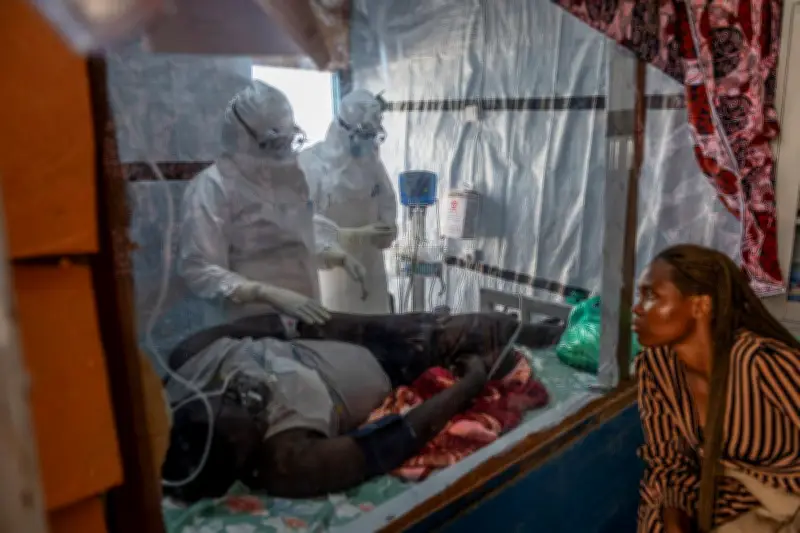
The Ebola outbreak, first detected in early 2026, has now spread to a fourth province, according to the World Health Organization. As of late June, there have been 342 confirmed cases and 158 deaths across the affected regions. The epicenter remains in Ituri province, where health workers are struggling to contain the virus amid community mistrust and security challenges.
“The situation is critical,” said Dr. Jean-Pierre Mwamba, a WHO epidemiologist in the region. “We need to ramp up vaccination and contact tracing, but restrictions on movement and gatherings must be targeted to be effective.”
Critics Allege Political Motivations
The ban on gatherings has been imposed in at least six provinces, including the capital Kinshasa, which is over 1,000 kilometers from the nearest Ebola case. Political analysts note that the government has recently faced growing protests over economic hardship and electoral reforms.
“The timing is suspicious,” said Professor Marie-Claire Uwimana, a political scientist at the University of Kinshasa. “The government is facing mounting pressure, and this ban gives them a legal tool to break up demonstrations.”
In response, government spokesperson Lambert Mende defended the measure, stating, “We cannot take chances with Ebola. The ban is based on scientific advice and applies equally to all gatherings, whether political, religious, or social.”
Impact on Daily Life and Dissent
The ban has disrupted daily life, with markets, churches, and schools forced to close in affected areas. In Kinshasa, police have dispersed several small protests, citing the Ebola decree. Opposition leader Martin Fayulu called the ban “a dictatorship disguised as health policy.”
International health experts have expressed concern that overly broad restrictions may backfire. “Blanket bans can erode public trust and make people less likely to cooperate with health authorities,” said Dr. Stella Chungong, a disease outbreak specialist. “We need precise, evidence-based measures.”
The United Nations has urged Congo to ensure that any restrictions are proportionate and respect human rights. The Ebola outbreak is the country’s 15th since the virus was first identified there in 1976.