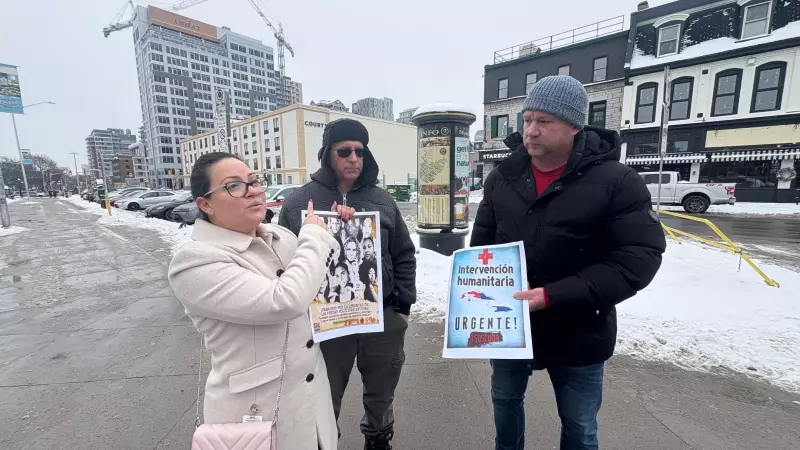
Members of the Cuban Canadian community in Ottawa have staged a public demonstration, calling for democratic reforms and regime change in Cuba. This mobilization comes in direct response to the recent arrest of Venezuelan President Nicolás Maduro and the escalating geopolitical tensions following a U.S. military strike on Venezuela.
Community Reaction to Regional Upheaval
The protest was organized by the Cuban Canadians Coalition and took place in the nation's capital on January 6, 2026. Participants voiced strong support for the ouster of Maduro, viewing it as a pivotal moment that could inspire similar democratic movements across Latin America, including in Cuba. The group's central demand is for the end of the long-standing communist government in Havana.
The arrest of the Venezuelan leader has sent shockwaves through diplomatic circles and diaspora communities worldwide. For many Cuban Canadians with direct ties to the island, the event is seen not in isolation but as part of a broader struggle against authoritarian regimes in the region that have historically supported each other.

Broader Political and Security Context
The demonstration occurs against a complex international backdrop. The U.S. strike on Venezuela, which Cuba claims resulted in the deaths of 32 of its officers, has sharply escalated tensions. Meanwhile, on the Canadian political stage, figures like former Bank of Canada governor Mark Carney have commented on the situation, suggesting that Canadian oil could become more competitive following Maduro's removal from power.
British Columbia Premier David Eby also entered the fray, using the crisis to advocate for a shift in Canadian energy policy. In the aftermath of the attack, Eby stated that Canada should focus on building refineries rather than pipelines, highlighting domestic economic security in a volatile global climate.
These statements from high-level officials underscore how the crisis in Venezuela is influencing domestic Canadian policy debates, particularly around energy independence and foreign relations.
A Unified Call for Freedom
The Ottawa rally represents more than a single protest; it is a manifestation of long-held aspirations within the Cuban diaspora. For decades, Cuban Canadians have advocated for political freedom and human rights on the island. The current instability in Venezuela, a key ally and economic supporter of the Cuban government, has reignited hopes that change may be possible.
The coalition's members argue that the fall of the Maduro regime could critically weaken the Cuban government, potentially creating an opening for democratic transition. Their message is clear: the international community must not only address the crisis in Venezuela but also recognize and support the desire for change in Cuba.
As global attention remains fixed on Caracas, the voices from Ottawa serve as a potent reminder that the ramifications of this geopolitical shift are felt deeply in communities across Canada, shaping both foreign policy discussions and the hopes of diaspora groups yearning for a new future in their homeland.