Democrats Tout Modest Constraints in DHS Funding Bill as ICE Controversy Simmers
In a significant bipartisan development, Democrats have highlighted modest but meaningful constraints on President Donald Trump's immigration enforcement apparatus within a newly proposed spending bill for the Department of Homeland Security. The legislation, unveiled on Tuesday, represents a delicate balancing act as lawmakers navigate deep political divisions over immigration policy while attempting to fund critical government operations.
The Funding Bill's Key Provisions and Democratic Strategy
The $64 billion Department of Homeland Security funding bill maintains Immigration and Customs Enforcement spending at approximately $10 billion, consistent with previous funding levels. However, Democrats have secured several important oversight measures that they argue provide necessary guardrails against agency overreach. These include $20 million specifically allocated for the purchase and operation of body-worn cameras for both ICE and Customs and Border Protection officers.
Additionally, the legislation mandates de-escalation training for agents and reinforces training that reminds officers of Americans' constitutional right to record their interactions with law enforcement. This provision comes in response to numerous viral social media videos showing aggressive behavior toward citizens documenting ICE activities, particularly in Minneapolis and other communities across the nation.

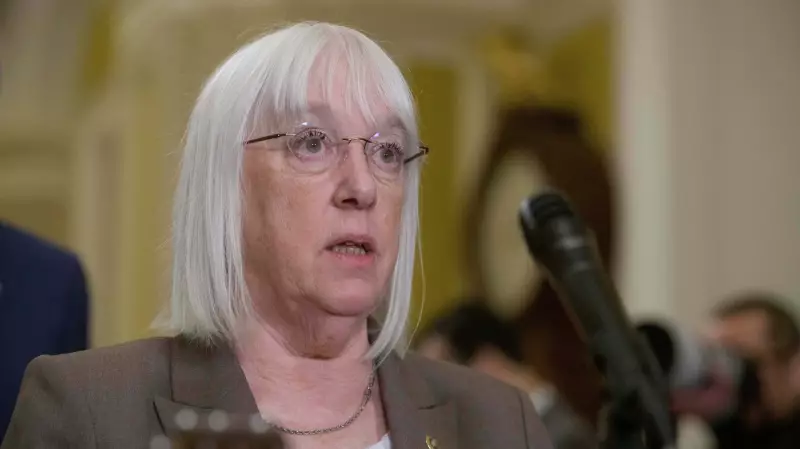
Senator Patty Murray of Washington, the top Democrat on the Senate Appropriations Committee, emphasized the strategic importance of these constraints in her official statement. "ICE must be reined in, and unfortunately, neither a continuing resolution nor a shutdown would do anything to restrain it," Murray argued, pointing to the $75 billion in additional funding that ICE already received from Republicans last year through what she described as a "massive slush fund."
The Political Calculus Behind Funding Controversial Agencies
The legislation has sparked intense debate within Democratic ranks, with progressive voices calling for more aggressive action against what they characterize as an out-of-control agency. Representative Ayanna Pressley of Massachusetts recently described ICE's actions as "unconstitutional, unlawful, cruel, rogue, racist, and terrorizing communities" during an interview on MS NOW.
Despite these strong criticisms, Democratic leadership has adopted a pragmatic approach. "The hard truth is that Democrats must win political power to enact the kind of accountability we need," Murray acknowledged in her statement, framing the current legislation as an incremental step toward greater oversight while recognizing political realities.
Representative Rosa DeLauro of Connecticut, the top Democrat on the House Appropriations Committee, echoed this sentiment while warning of the consequences of a government shutdown. "If we allow a lapse in funding, TSA agents will be forced to work without pay, FEMA assistance could be delayed, and the U.S. Coast Guard will be adversely affected," DeLauro cautioned, emphasizing that a shutdown would not impact ICE operations due to the agency's substantial existing funding.
Transparency Measures and Oversight Mechanisms
The spending bill establishes unprecedented oversight and transparency requirements for how DHS utilizes its substantial funding. These provisions specifically target the department's ability to transfer funds between accounts, a mechanism that critics argue could allow the administration to circumvent congressional intent. The legislation represents a direct response to what Democrats characterize as the "One Big Beautiful Bill" passed by Republicans last year, which provided DHS with what they consider excessive discretionary funding.
Heidi Altman, vice president of policy at the National Immigration Law Center, offered a starkly different perspective on the legislation's effectiveness. "There's nothing in the text of this bill that meaningfully puts constraints on what agents are actually doing in the street, which is engaging in lawlessness and violence," Altman stated in an interview with HuffPost. She characterized Democratic arguments about limited options as "imagined helplessness" and urged more aggressive opposition to the funding measure.

The Road Ahead and Political Implications
With DHS funding set to expire by January 30, lawmakers are racing against the clock to pass appropriations bills for all government agencies. The House is expected to vote on the legislation this week, with Democratic leaders hoping to avoid another politically damaging shutdown that could distract from their focus on economic issues ahead of the 2026 midterm elections.
The debate over ICE funding continues to highlight deep divisions within the Democratic coalition, with progressive activists pushing for more radical reforms while party leadership pursues incremental change through legislative channels. As Altman rhetorically asked, "Why don't members just toss up their hands and close down their offices and go home? Every day that they show up in their offices on Capitol Hill is an opportunity for them to sit down and look at what opportunities are in front of them in that moment to protect their communities."
This tension between pragmatic governance and transformative policy change will likely continue to shape the immigration debate as Congress moves forward with funding decisions that have profound implications for both border security and civil liberties.