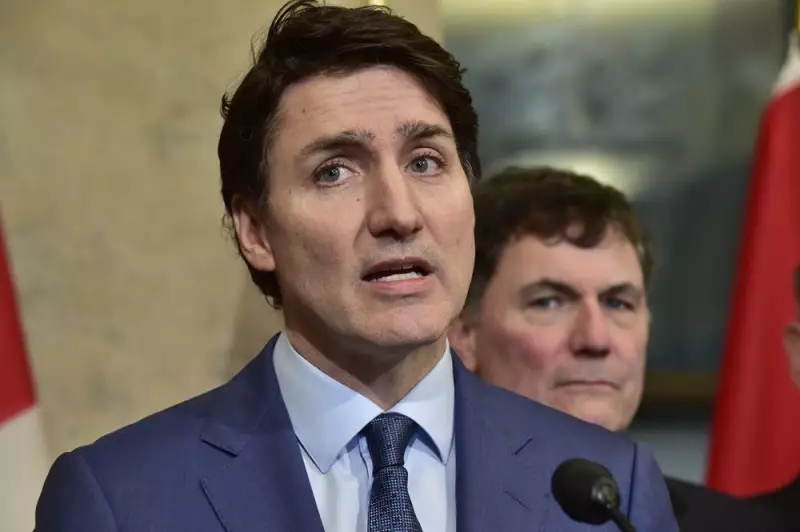
A recent editorial argues that Canadians are now facing the costly consequences of what it calls a "lost decade" of economic growth and strategic planning under the former Liberal government of Justin Trudeau. The piece, published on January 6, 2026, contends that rapidly shifting global events have exposed critical vulnerabilities in Canada's economic and national security posture.
The Energy Superpower That Wasn't
The editorial's central critique focuses on Canada's energy sector. It argues that the previous government missed a crucial opportunity to leverage the nation's vast oil and natural gas resources to become a global energy superpower. Instead of expanding critical energy infrastructure, the Trudeau administration is accused of downplaying these resources, based on what the editorial labels a "ridiculous argument" that the fossil fuel era was ending.
The consequence, as outlined, is that Canada now plays catch-up, forced to sell the vast majority of its oil at a significant discount to the United States, its only major customer. This precarious position is further complicated by the assertion that U.S. President Donald Trump has "taken over Venezuela," granting America access to the world's largest oil reserves.

Carney's Challenge and Persistent Obstacles
Prime Minister Mark Carney is cited as acknowledging that fossil fuels will remain part of the global economy for the foreseeable future, a stance presented as a departure from his predecessor. Carney is quoted stating that Canadian oil can remain competitive globally due to being cleaner, less expensive, and lower risk compared to sources like Venezuela.
However, the editorial expresses deep skepticism about Canada's ability to become globally competitive. It highlights that building the necessary energy infrastructure—primarily pipelines—will take years and faces "perpetual opposition" from the governments of British Columbia and Quebec, as well as from some Indigenous leaders.
Military Neglect and Sovereignty at Risk
The critique extends beyond energy to national defence. The piece labels the Trudeau government's handling of the military as another "key failing," resulting in a decade of neglect. Canada is now in a position where it must urgently modernize its forces not only to meet NATO commitments but also to ensure its own security.
The editorial starkly warns that a nation unable to competently patrol its own territory, especially the resource-rich Far North which attracts interest from the U.S., China, and Russia, is "not a sovereign nation in any real sense of the word."
Compounding these issues, the piece recalls that Carney himself, during the Liberal leadership race, pointed to underlying economic struggles predating Trump's trade wars. These were attributed to high immigration policies and the federal government's runaway operating costs under Trudeau.
The overarching conclusion is that while Canada's government "slept on these issues for a decade, the world changed," leaving the country in a weakened and reactive position on the global stage.