One of the key figures in patriating Canada’s constitution and bringing the Charter of Rights and Freedoms into being says the Carney government is out of line. Former Newfoundland Premier Brian Peckford, the last living elected official who helped seal the deal, says in asking the Supreme Court to alter the Notwithstanding Clause, the Carney government is acting unconstitutionally.
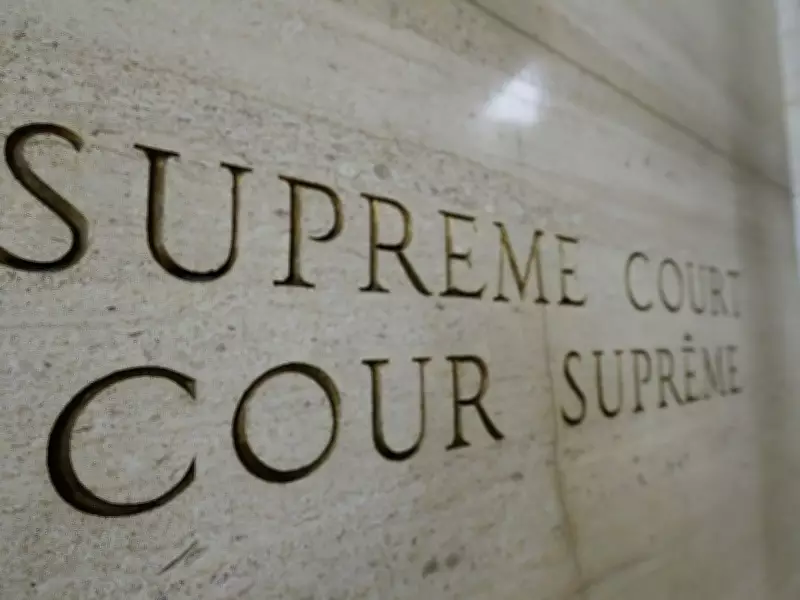
The Notwithstanding Clause, otherwise known as Section 33 of the Charter, is currently before the Supreme Court as part of a challenge to Quebec’s Bill 21. That law bans public servants from wearing visible religious symbols on the job, a likely Charter violation, but the province invoked the Notwithstanding Clause to prevent court challenges.
Carney’s constitutional claims are a call for an amendment
In a shocking move, the Carney government submitted a factum to the Supreme Court last fall and then presented verbal arguments last month calling on the court to put limits on the use of the clause. “The temporary character of the use of s. 33 confirms that it cannot be used to cause an irreparable impairment of the rights and freedoms guaranteed by ss. 2 or 7 to 15 of the Charter. Such use would amount to indirectly amending the Constitution. It follows that the courts must retain jurisdiction to review, on a case-by-case basis, whether the use of s. 33 violates this limit,” the Carney government’s submission reads.

The claim that section 33 is and must be temporary isn’t supported by the text of the Charter. In fact, the Charter puts no limits on the use of the clause, saying only that any use must be renewed by a vote in the legislature every five years. The Carney government wants the Supreme Court to state that the clause cannot be used repeatedly.
Peckford helped draft the actual amending formula
That’s exactly what they are trying to do and it’s what has Peckford so upset. He was part of a group of premiers that hashed out the workings of the amending formula that is in the constitution. It requires the consent of seven provinces comprising at least 50% of the population of the country. With their arguments before the Supreme Court, the Carney government is looking to amend the constitution with as few as four of the seven judges who heard the Bill 21 case.
“This is insidious,” Peckford said in the most recent episode of the Full Comment Podcast. “The federal government is now about trying to usurp and change the constitution illegally or unconstitutionally.”
Recently, as reported by the Montreal Gazette, Quebec Premier Christine Fréchette emerged from a meeting with Prime Minister Mark Carney saying that he had assured her that his government has “no intention of amending or placing limits” on the Notwithstanding Clause. The Canadian Press reported at the same time that Justice Minister Sean Fraser had apologized to Fréchette for suggesting there should be limits on the clause.
Arguments have already been made and the Supreme Court is deliberating
That’s a nice bit of political theatre, Carney’s reassurance and Fraser’s apology, but the arguments have already been made to the Supreme Court. The government can say what it wants now, they already asked the court the put limits on the clause and the court is now considering those arguments.
“The federal government does not have the power, nor does the court. They’re out of line,” Peckford told me. “The Supreme Court should say to the federal government, we’re not even going to entertain your factum because this goes against everything, every constitutional principle that we have.”
I wish the Supreme Court would tell the Carney government that they were out of line in their arguments, that they are asking the court to illegally amend the constitution. My fear is that they won’t. The current make-up of the court doesn’t seem to value history, tradition or precedent, they want to chart their own path. A constitution that requires seven provinces and 50% of the population to approve changes, shouldn’t be amended by four judges, but it might be. If it does, Carney will get his way and he will still be able to say he didn’t want the very thing his lawyers argued for.