Trump's Advisors Engage in Competitive Praise During Memphis Crime Discussion
President Donald Trump received unequivocal support from Homeland Security adviser Stephen Miller and FBI Director Kash Patel regarding his ongoing efforts to combat crime in Memphis, Tennessee. The two officials faced significant social media criticism this week for their effusive praise of the president during a Monday briefing. Experts in political science and mental health have now analyzed what this moment reveals about Trump's leadership style and why it raises serious concerns.
The Memphis Safe Task Force Roundtable
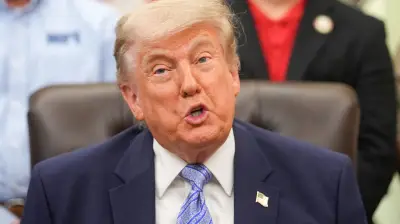
During the roundtable discussion, Trump highlighted the accomplishments of the Memphis Safe Task Force, an initiative he established last year that coordinates federal, state, and local law enforcement personnel to address crime in the southern city. He was accompanied by several officials, including Patel, Miller, Tennessee Governor Bill Lee, Defense Secretary Pete Hegseth, and Attorney General Pam Bondi, all of whom offered substantial praise to the president.
Hegseth expressed gratitude for Trump's "historic leadership," while Governor Lee commended Trump's strategy "not just to make Memphis safe, not just to make Tennessee safe, but to make all of America safe again." However, it was a specific social media clip featuring Miller, Trump, and Patel that captured widespread attention and concern.

A Viral Moment of Competitive Flattery
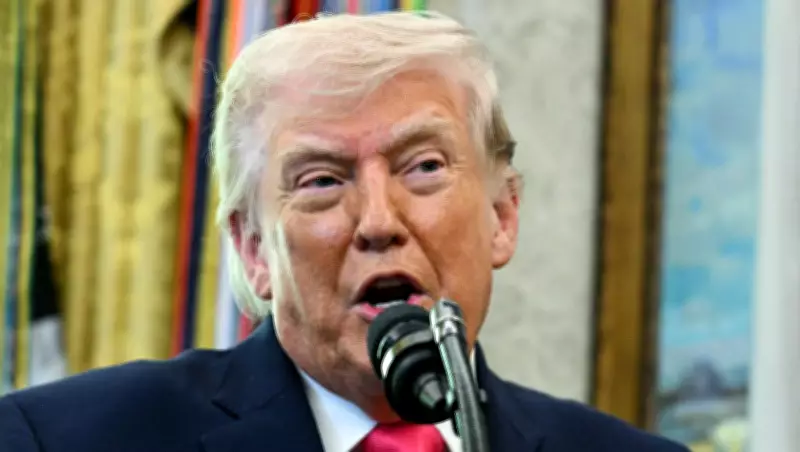
After celebrating the Memphis task force's achievements, Miller declared: "What President Trump has done on border security and public safety is a national miracle that will be studied not only for generations, but for centuries to come." Trump, appearing visibly pleased, then turned to Patel and challenged him: "So, Kash, see if you can top that. I don't know, that is tough, Kash."
Patel acknowledged the difficulty but proceeded with his own praise: "You know Mr. President as I look around this venue... I'm reminded again why we have the greatest warriors on God's green Earth — the men and women serving in uniform, the men and women serving and wearing the badge and law enforcement, our police, our sheriffs around the state of Tennessee."
He continued: "But what we didn't have was you. We didn't have a commander in chief who backed the blue, who resourced the blue, who funded the military, who did whatever it takes to safeguard every single life. So while we're out there fighting for the dreams of our children, just know Mr. President how many millions of dreams like mine are going to be lived thanks to your brilliant leadership."
Political Science Experts Voice Concerns
Alvin B. Tillery Jr., a professor of political science and African American studies at Northwestern University, believes the "nature and function" of the praise displayed in the viral clip deserves careful attention. "Voters should at least take this seriously and think carefully about what it signals," he told HuffPost. "The concern isn't about praise in isolation. Every president gets praised by allies. The issue is the nature and function of the praise."
Tillery explained that when public officials appear to be "competing to flatter the president," it raises several critical concerns:
- Decision-making quality: Are policies being shaped by evidence and expertise, or by what will please the president?
- Suppression of dissent: Healthy governance requires disagreement, debate, and internal critique. If officials feel pressure to perform loyalty, that space shrinks.
- Shift away from institutional norms: In a democracy, officials are supposed to serve the Constitution and the public — not the personal brand of the president.
"So, the deeper issue here is not style — it's governance," Tillery emphasized. "This kind of dynamic can erode the guardrails that make democratic systems resilient. And historically, when you see sustained patterns of this kind of behavior, it's often a sign that the administration is operating less like a traditional democratic executive and more like a personality-centered political organization."

Leadership and Governance Implications
Todd Belt, professor and political management program director at George Washington University's Graduate School of Political Management, stressed that the exchange represented "a bad sign for Trump's leadership."
"A president needs honest advisers who will give him bad news and tell him when he is wrong," he explained. "If you don't have honest advisers and even a devil's advocate to criticize the various ideas the president entertains, the more likely you are to have a catastrophic decision."
Jacob Neiheisel, associate professor of political science at the University at Buffalo College of Arts and Sciences, noted that if the public behavior of Trump's advisers reflects what occurs privately, "then I think that there is certainly cause for worry."
"I believe that we want decision-makers who are capable of dealing with different perspectives and even, at times, welcome them," Neiheisel said. "My mind runs to the fact that part of the justification for the existence of executive privilege is that we actually want a president's advisers to be comfortable bringing different ideas to the fore when difficult decisions have to be made. Although deference aids in accountability, it seems to me that we also want a president's advisers to feel like they are free to level a degree of dissent."
Psychological Analysis of the Exchange
Hallie Kritsas, a licensed mental health counselor and therapist with Thriveworks who specializes in self-esteem, workplace issues, and anxiety, analyzed the exchange as reflecting "a leadership style that is validation seeking and hierarchy driven."
"This type of overt admiration in group settings can allow for a culture that things like flattery or loyalty are then prioritized over constructive criticism," she explained. Regarding Trump encouraging Patel to "top" Miller's praise, Kritsas noted the moment revealed "a desire for affirmation and admiration as the other individuals' praise becomes performative and competitive."
"From a therapeutic or psychological standpoint, it can point to external validation playing a huge role in self-esteem regulation," she added.
Personalist Executive Model
Tillery further analyzed that the exchange demonstrates something consistently observed: "Donald Trump governs through personalism rather than institutionalism."
"When Trump says, 'Kash, see if you can top that,' he's effectively turning governance into a loyalty contest," Tillery stated. "That's not about policy outcomes— it's about who can demonstrate the greatest degree of allegiance to him personally."
The exchange reveals that Trump values "visible, performative loyalty" and that he "encourages competition among subordinates."
"That's a classic managerial tactic in highly centralized, personality-driven organizations," Tillery said, adding that Trump "blurs the line between governance and spectacle."
"From a political science perspective, this is what we call a shift toward a personalist executive model," Tillery explained. "Authority flows through the individual, not the institution. And that has consequences: It can weaken bureaucratic independence, distort decision-making, and elevate loyalty over expertise. Some would say that this is the style of authoritarians, and what Trump is signaling is his desire to remake American democracy in the style of an authoritarian regime."
Departure from Presidential Norms
Experts emphasized that this public praise session represents abnormal behavior for a president. Neiheisel noted that while past administrations have naturally sought to "make the president look good and to 'sell' the performance of the president to the American people," the behavior displayed between Patel, Miller, and Trump is unusual.
"It certainly feels like Trump's people are falling all over themselves to praise the boss in these kinds of settings, with Trump seeming to cheer them on," he observed. "Other presidents, at least outwardly, have tried to give the appearance that they welcome dissent and an open exchange of ideas, even if they haven't always exhibited shades of Lincoln's famed 'team of rivals' approach."
Tillery added that while presidents throughout history have expected loyalty from their teams, "you typically don't see cabinet-level or senior officials engaging in overt, almost competitive displays of personal praise for the president in public settings."
"That's where this feels abnormal. It departs from the norms of institutional respect and professional distance that have historically characterized executive branch behavior," he said. "Public interactions are usually structured around policy, governance and competence — not personal adulation."
Fear and Submission Within the Administration
Belt offered a striking comparison: "The fealty of this president's advisers would be shocking if it were any other president. We know that Donald Trump loves this sort of adulation and submissiveness from those around him, and he believes the flattery — and he loves to retell the nice things people have said of him."
He referenced previous reports that members of the Trump administration, such as Vice President JD Vance and Secretary of State Marco Rubio, wear shoes gifted to them by Trump despite them being the wrong size.
"But now it has gotten comical, with advisers and cabinet members feeling obligated to wear the unfitting shoes that Trump has purchased for them," Belt noted. "They don't even feel confident enough around him to tell him that he bought them the wrong size. This gives an idea of just how cowed they are by Trump and how much they fear him."
The Memphis briefing, intended to highlight crime reduction efforts, has instead sparked a broader conversation about leadership dynamics, democratic norms, and the psychological underpinnings of Trump's governance style according to multiple experts across disciplines.