A recent media report about a threatening email sent to Muslim students at the University of Calgary is deeply unsettling — but, for many of us, not entirely surprising.
The message targeted the Muslim Students’ Association, leaving students shaken and questioning their safety in a space that is meant to foster learning and belonging.
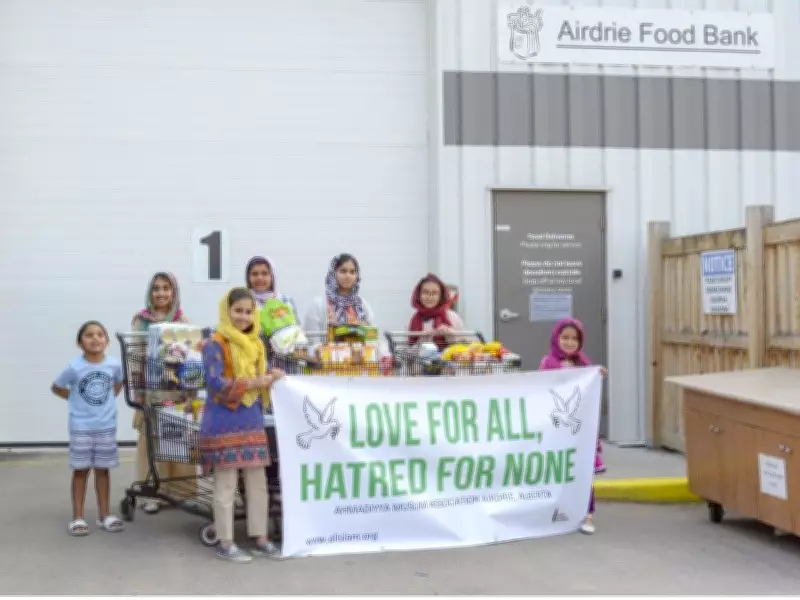
As an Ahmadiyya Muslim woman, I read this story with a familiar weight. Our community is guided by the principle of “Love for All, Hatred for None,” a motto that calls us to respond to hostility with compassion and service. Yet, like many Muslim communities, we often find ourselves navigating suspicion, hostility and misrepresentation.

Such incidents underscore a difficult truth: Islamophobia does not differentiate between sects, cultures or personal interpretations of faith. It flattens our diversity into a single narrative — one that too often casts us as outsiders.
Emotional Aftermath and Personal Impact
What resonated most with me was not only the threat itself, but its emotional aftermath. One student spoke about feeling unsafe in a country their family trusted enough to call home. That sense of rupture — of trust eroded — is profound.
For Muslim women, especially those who visibly express their faith, this fear is not abstract. It influences how we move through public spaces, how we engage in classrooms and how we present ourselves in everyday interactions. The simple act of existing openly can feel like a risk calculation.
For Ahmadiyya Muslim women, there is an added layer of complexity. While we share in the broader struggles against Islamophobia, we also occupy a unique and sometimes vulnerable position within the Muslim world itself. That dual marginalization can make moments like this feel isolating — but it also reinforces the importance of solidarity.
Muslim Students as Community Contributors
At the same time, it is important to recognize what often goes unacknowledged in these narratives. Muslim student organizations are not insular or exclusionary spaces. They are hubs of community service, charity and outreach. Across Canada, Muslim students organize food drives, mental-health initiatives and interfaith dialogues.
These efforts reflect a core Islamic teaching: that service to humanity is an essential expression of faith. As Ahmadis, we believe the most meaningful response to hate is to deepen our commitment to serving others.
However, goodwill alone cannot counteract the harm caused by threats and intimidation. Institutions such as the University of Calgary must go beyond issuing statements of concern. Visible, consistent measures to protect students are essential.
Institutional Responsibility and Proactive Measures
This includes clear reporting mechanisms, timely communication and a proactive approach to addressing bias before it escalates. Safety is not only about responding to incidents; it is about cultivating an environment where such incidents are less likely to occur in the first place.
Universities must invest in anti-racism training, support services for affected students, and partnerships with community organizations. They should also ensure that security protocols are transparent and accessible to all students, particularly those from marginalized groups.
Community members, too, have a role to play. Allies can show solidarity by attending interfaith events, speaking out against hate, and supporting Muslim-led initiatives. The broader public must reject the normalization of Islamophobia in media and political discourse.
Ultimately, fighting Islamophobia requires a collective commitment. The university, the community, and students each have unique responsibilities. By working together, we can create a safer, more inclusive environment for everyone.