Hungary's Democratic Turnaround: A Global Setback for Illiberal Politics
The seemingly unstoppable global expansion of the illiberal right has encountered a formidable obstacle in Central Europe. After 16 years of what political scientists term "electoral autocracy" under Viktor Orbán, Hungary has delivered a stunning electoral result that defies recent political trends. The victory of democratic centre-right leader Péter Magyar represents not just a domestic political shift but a potential inflection point for illiberal movements worldwide.
A Decisive Electoral Mandate
Péter Magyar secured approximately 54 percent of the vote in Hungary's recent parliamentary election, while incumbent Prime Minister Viktor Orbán received only 38 percent support. The margin was so substantial that Orbán, who has governed Hungary since 2010 and developed close political ties with former U.S. President Donald Trump, was compelled to concede defeat. Magyar's Tisza party will now control more than two-thirds of the 199 seats in the Hungarian parliament, providing the new government with a powerful legislative mandate.
The conclusiveness of the result prevented any possibility of election denial tactics, which have become increasingly common among illiberal leaders globally. Orbán, who has frequently employed Trump-style political strategies, found himself unable to challenge the legitimacy of an election outcome that was too clear to dispute.

International Perspectives on the Political Earthquake
Michael Ignatieff, former leader of Canada's Liberal Party who served as president of the Central European University in Budapest from 2016 until its forced relocation to Vienna in 2017, described Magyar's victory as an "earthquake" in Hungarian politics. Speaking from his property on Lake Balaton in Hungary, Ignatieff emphasized the significance of the political shift.
"Hungary has experienced 16 years of a regime that perfected constant 24/7 propaganda, dominating the mental atmosphere of the country," Ignatieff noted. "Orbán then made this model available for export, attracting illiberal conservatives from around the world. I'm hopeful that this export trade has now been dealt a shattering blow."
Campaign Strategies and Geopolitical Implications
Orbán's campaign strategy mirrored his previous electoral approaches but with updated targets. While his 2018 campaign focused heavily on Hungarian-American philanthropist George Soros, the 2026 election saw Orbán attempting to demonize Ukrainian President Volodymyr Zelenskyy. The Hungarian leader warned voters that Zelenskyy might drag Hungary into the Ukraine conflict, resulting in Hungarian casualties.
Ignatieff observed that most Hungarian voters recognized Russia as the aggressor in the Ukraine war and found Orbán's characterization of Zelenskyy unconvincing. This miscalculation contributed to Orbán's electoral defeat and has significant implications beyond Hungary's borders.
The impact of Magyar's victory extends throughout Europe and potentially alters the geopolitical landscape. Ignatieff suggested the result will discourage conservative politicians in Poland and illiberal authoritarians in Slovakia who have looked to Orbán's Hungary as a model. Perhaps most significantly, the election removes Hungary's veto power that had been blocking approximately 90 billion euros in European Union financial support for Ukraine.
"This development is of real geopolitical importance," Ignatieff emphasized. "Hopefully it creates conditions where Ukraine doesn't have to accept the dire peace terms that both Donald Trump and Vladimir Putin have sought to impose on Zelenskyy."
A Clear Rejection of Russian Influence
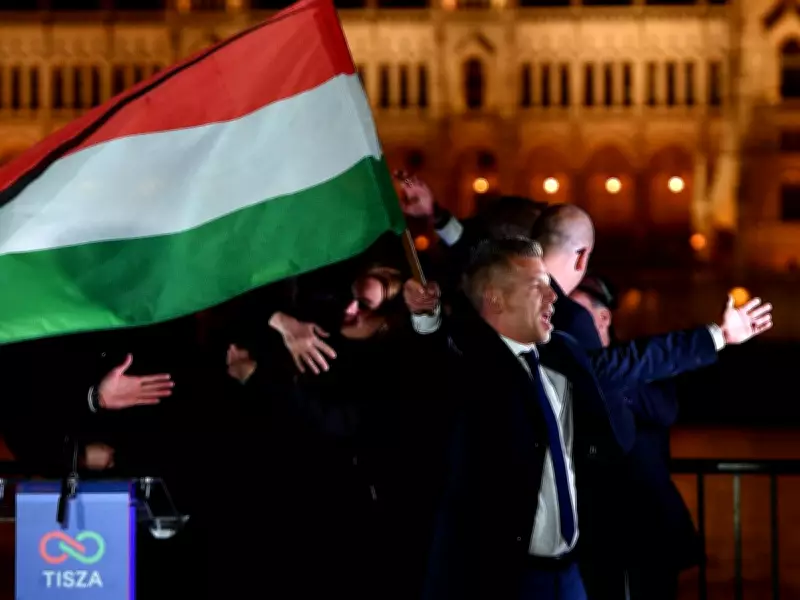
The symbolic significance of Hungary's political shift was evident in the victory celebrations in Budapest, where crowds chanted "Ruszkik haza"—"Russians go home." This sentiment reflects a broader rejection of Russian influence that had grown under Orbán's leadership and suggests a renewed commitment to European democratic values.

Vladimir Putin's government had invested substantial resources in digital campaigns against Magyar, making the electoral outcome particularly disappointing for Moscow. The Hungarian election result represents not just a domestic political change but a potential recalibration of power dynamics in Central Europe, with implications for EU unity, support for Ukraine, and the future trajectory of illiberal political movements globally.