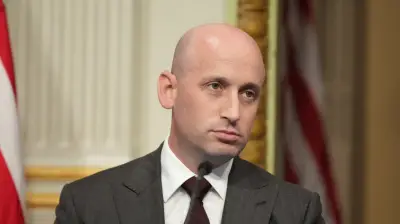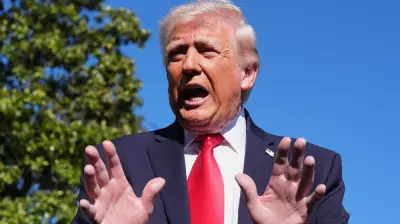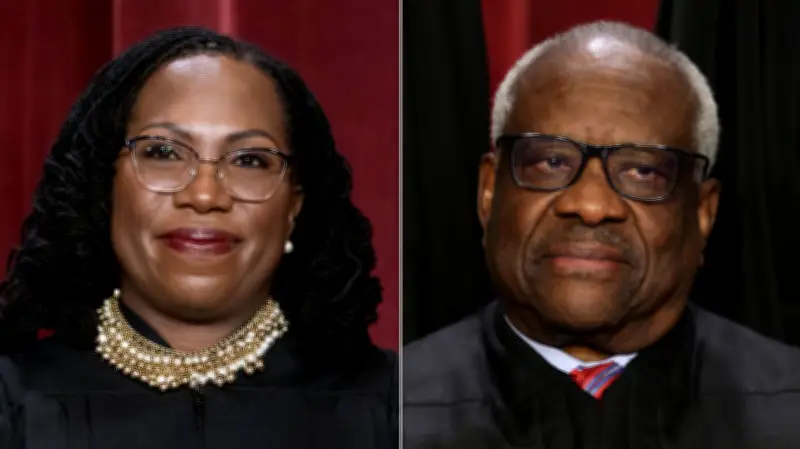
The Supreme Court on Tuesday upheld birthright citizenship in a 6-3 ruling, rejecting President Donald Trump's executive order that sought to deny citizenship to children born to parents who are in the U.S. illegally or temporarily. Justice Ketanji Brown Jackson issued a sharp concurring opinion, calling out Justice Clarence Thomas and the Trump administration for what she described as ahistorical arguments.
Jackson's Concurrence and Thomas's Dissent
Jackson criticized Thomas's dissent, which argued that the 14th Amendment's Citizenship Clause was intended only for freed Blacks and those in analogous situations. Jackson called this interpretation "ahistorical," denying that the text at issue conferred citizenship only on a limited group. She also blamed the Trump administration and Thomas for repurposing the amendment, noting that the Civil Rights Act initially included only Black people but was later expanded to all ethnic backgrounds.
"By ignoring that our Constitution stands firmly against caste and subjugation—on all axes and in all manners—they deny the clear, universalist vision shared and proclaimed by the Fourteenth Amendment's Framers," Jackson wrote, quoting the Framers' goal to "rebuild a shattered empire ... to plant deep and solid the corner-stone of eternal justice, and to erect thereon a superstructure of perfect equality of every human being before the law."

Jackson further argued that the alternative account "pitches Black Americans against immigrants when the advocates who promoted the Fourteenth Amendment did no such thing."
The Ruling and Its Impact
Chief Justice John Roberts wrote for the majority, stating, "Children born in the United States to parents unlawfully or temporarily present are 'subject to the jurisdiction' of the United States and are citizens at birth under the Fourteenth Amendment's Citizenship Clause." Justices Samuel Alito and Neil Gorsuch joined Thomas in dissent.
Thomas, an originalist, argued that the ruling "devalues" citizenship and doubted it would "stand the test of time." The Trump administration had contended that the 14th Amendment's birthright citizenship clause was meant to limit citizenship to children of parents "domiciled" in the U.S., who owe "allegiance" to America.
Reacting to the decision, Trump called it "bad for our Country" and urged Congress to act, writing on Truth Social, "No long and unwieldy Constitutional Amendment is necessary! Congress should start TODAY to work on ending expensive and unfair to our Country, Birthright Citizenship. They will have my Complete and Total Support!"
Broader Context
Trump's executive order, issued on his first day in office in 2025, threatened to upend the 14th Amendment, which states that "all persons born or naturalized in the United States, and subject to the jurisdiction thereof, are citizens of the United States and of the States wherein they reside." The order faced unanimous opposition in lower courts before reaching the Supreme Court.
Trump attended the Supreme Court hearings in April, an apparent first for a sitting president, and later falsely claimed on Truth Social that the U.S. is "the only Country in the World STUPID enough to allow 'Birthright' Citizenship!" In reality, more than 30 countries, including Canada, Mexico, and Brazil, offer automatic birthright citizenship.