Israel and Lebanon signed a framework agreement on June 27, 2026, described as a first step toward peace after months of conflict between Israel and the Lebanese militant group Hezbollah. The deal requires Hezbollah to disarm, a condition that experts say will be extremely challenging to implement.
Details of the Agreement
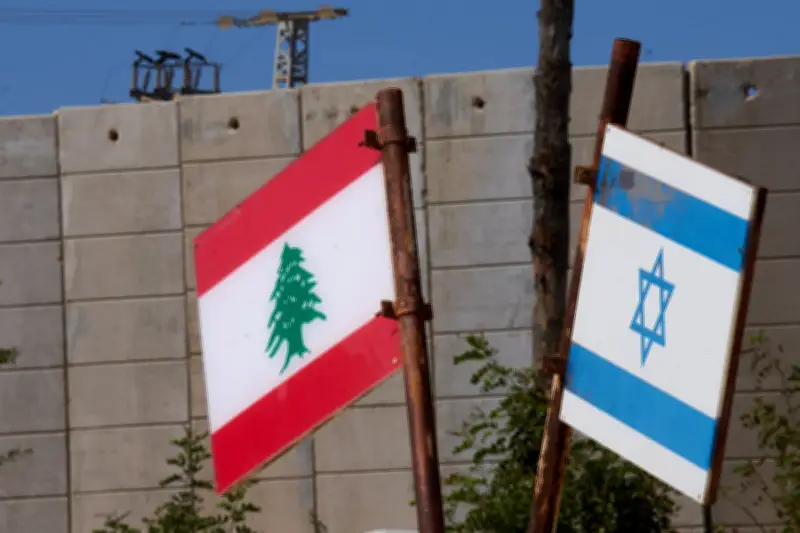
The framework agreement was signed at a ceremony near the border, with Israeli and Lebanese flags displayed at a memorial site in northern Israel. The accord aims to establish a permanent ceasefire and address long-standing disputes, including border demarcation and security arrangements.
According to the Associated Press, the deal explicitly calls for the disarmament of Hezbollah, which is designated as a terrorist organization by Israel and many Western countries. The group has been a major military and political force in Lebanon for decades, with an extensive arsenal of rockets and missiles.

Challenges to Disarmament
Analysts warn that enforcing Hezbollah's disarmament will be difficult. The group is deeply embedded in Lebanese society, with significant political influence and a well-armed militia. Hezbollah has previously resisted calls to disarm, citing the need to defend Lebanon against Israeli aggression.
“Hezbollah’s military wing is a central pillar of its identity and power,” said a regional security expert. “Expecting it to voluntarily give up its weapons is unrealistic without a comprehensive security framework that addresses its concerns.”
The agreement does not specify a timeline for disarmament or mechanisms for enforcement. It remains unclear how Lebanon’s government, which includes Hezbollah representatives, will implement the provision.
International Reactions
The United States and European Union have welcomed the agreement, but expressed caution about its implementation. A U.S. State Department spokesperson said, “We support any step toward peace, but the disarmament of Hezbollah is essential for long-term stability.”
Hezbollah has not officially commented on the deal, but its leaders have previously stated that they would not disarm as long as Israeli threats persist. The group’s media outlets have downplayed the significance of the agreement.
Potential Impact
If implemented, the disarmament of Hezbollah could reshape Lebanon’s political landscape and reduce tensions along the Israeli-Lebanese border. However, failure to enforce the provision could undermine the agreement and lead to renewed hostilities.
The deal is seen as a diplomatic breakthrough after months of fighting that displaced thousands and caused significant casualties. Both sides have expressed cautious optimism, but the path forward remains uncertain.