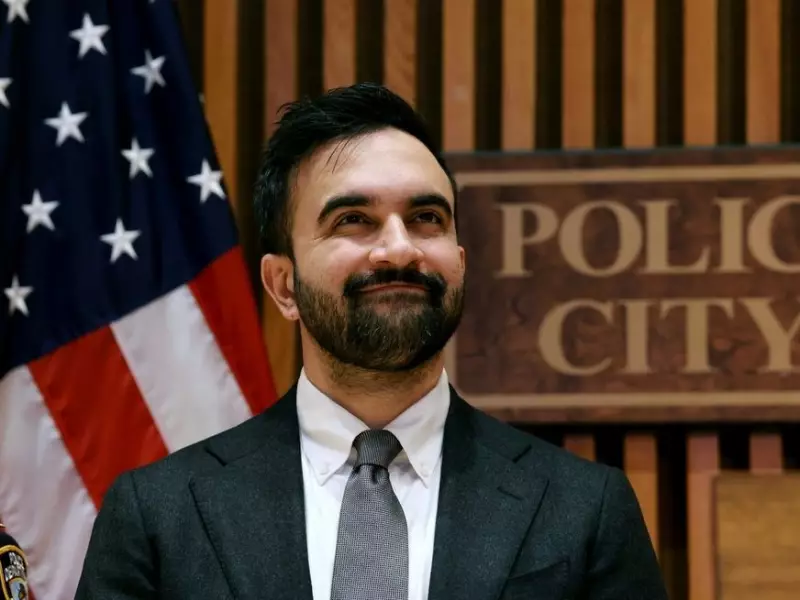
New York City's political direction has taken a sharply ideological turn, sparking a national conversation about the role of government and individual effort. In his inaugural address on January 16, 2026, Mayor Zohran Mamdani declared a mission to "replace the frigidity of rugged individualism with the warmth of collectivism."
A Philosophical Divide on Fairness and Outcomes
This statement, as analyzed by columnist Larry Elder, is seen as capturing the core of a socialist worldview: the belief that inequality is inherently unfair and must be actively corrected by the state. Elder argues that Mamdani's philosophy advocates for taking resources from those deemed "undeserving" and redistributing them to those deemed "deserving." The critique centers on the idea that this approach shifts government's focus from guaranteeing equal rights to promising equal outcomes, a fundamental departure from traditional American and Canadian values of personal agency.
The Counter-Argument: Wisdom from Hard-Earned Success
In contrast to the mayor's vision, Elder presents a formula for escaping poverty that he says is endorsed by think tanks across the political spectrum, from the left-leaning Brookings Institution to the right-leaning American Enterprise Institute. The consensus, he writes, includes: finishing high school, getting married before having children, obtaining and keeping a job, and avoiding the criminal justice system.

The column is fortified with quotes from historical figures who championed self-reliance and hard work. Economist Walter Williams, who grew up in poverty, stated, "You're not responsible for the cards you're dealt. But you are responsible for picking them up and playing them to the best of your ability."
Elder extensively cites Booker T. Washington, born into slavery, who emphasized the dignity of labor and the ultimate reward for skill and excellence, regardless of race. Washington believed the world would inevitably recognize and reward true merit.
Blueprint for Building Wealth from the Ground Up
The article also highlights the practical financial tenets of A.G. Gaston, a grandson of slaves with a tenth-grade education who died at 103 with an inflation-adjusted net worth of $250 million. His ten rules included paying yourself first, saving at established institutions, finding a need to fill, and living within your means.
Finally, Elder shares the advice of his father, Randolph Elder, a World War II Marine staff sergeant with an eighth-grade education who accumulated a $1.5 million net worth. His counsel was straightforward: "Hard work wins. You get out of life what you put into it... No matter how hard you work, how good you are, bad things will happen. How you respond will tell... if we raised a man."
Elder concludes that Mayor Mamdani's declaration reflects a "childlike failure" by someone raised in affluence to understand why some achieve more than others. He posits that the vast majority of wealthy individuals attain their status through consistent hard work applied over a long period of time—a notion he admits is "boring, but true." The debate underscores a deep and enduring philosophical clash about the engines of success and the proper role of government in society.