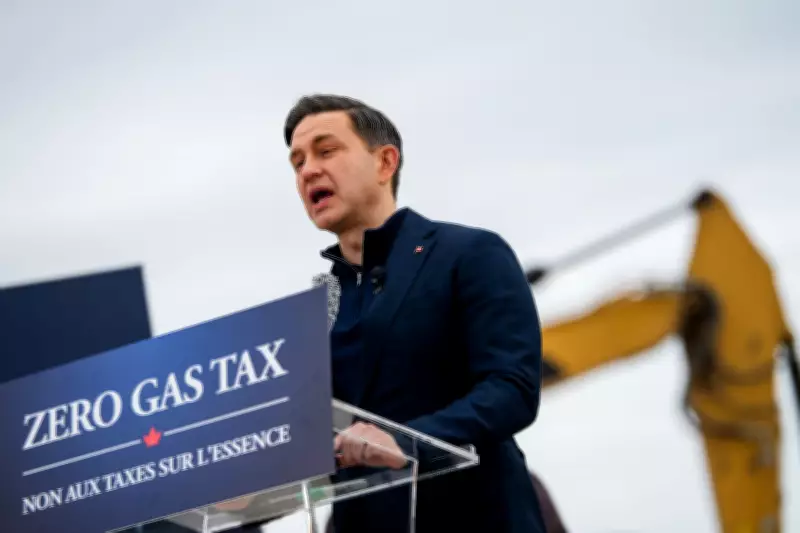
Conservative Leader Pierre Poilievre has called for the immediate suspension of all federal fuel taxes for the rest of 2026, arguing that the move would provide much-needed relief to Canadians grappling with high living costs. In a statement released on April 25, 2026, Poilievre urged the federal government to temporarily scrap taxes on gasoline and diesel, citing the rising cost of fuel as a key driver of inflation.
Poilievre's Proposal
Speaking to reporters, Poilievre emphasized that the suspension would apply to all federal fuel taxes, including the excise tax and the Goods and Services Tax (GST) on fuel. He estimated that this could save Canadian households hundreds of dollars per year. 'Canadians are being squeezed at the pumps, and the government is profiting from their pain,' Poilievre said. 'We need to put money back in their pockets.'
Impact on Consumers
The Conservative leader argued that the tax suspension would directly lower fuel prices, benefiting not only drivers but also businesses that rely on transportation. He pointed to recent data showing that fuel costs have risen by over 20% in some provinces compared to the previous year. 'This is a simple, immediate measure that will make a real difference,' Poilievre added.

Government Response
The Liberal government has not yet responded to Poilievre's proposal. However, Finance Minister Chrystia Freeland previously indicated that the government is exploring targeted measures to address affordability, including potential adjustments to the carbon tax. Critics of Poilievre's plan argue that suspending fuel taxes could reduce federal revenues needed for infrastructure and social programs.
Broader Context
The call comes amid ongoing debates about fuel pricing and taxation in Canada. Several provinces have already implemented temporary fuel tax cuts, and Poilievre's proposal aligns with his party's broader platform of reducing taxes and government spending. The Conservative leader has also criticized the federal carbon tax, which he claims disproportionately burdens working families.
As the 2026 parliamentary session continues, Poilievre's proposal is expected to spark further discussion on fiscal policy and energy costs. Canadians are watching closely as the government weighs its options to address the affordability crisis.