Supreme Court Debates Legality of Late-Arriving Mail-In Ballots
The United States Supreme Court is currently examining whether states can legally count mail-in ballots that arrive after the official Election Day, even when those ballots bear a postmark from on or before that crucial date. This legal question has sparked intense debate among the justices, with particular focus on the very meaning of the term "Election Day."
Justice Alito's Skepticism Based on Holiday Names
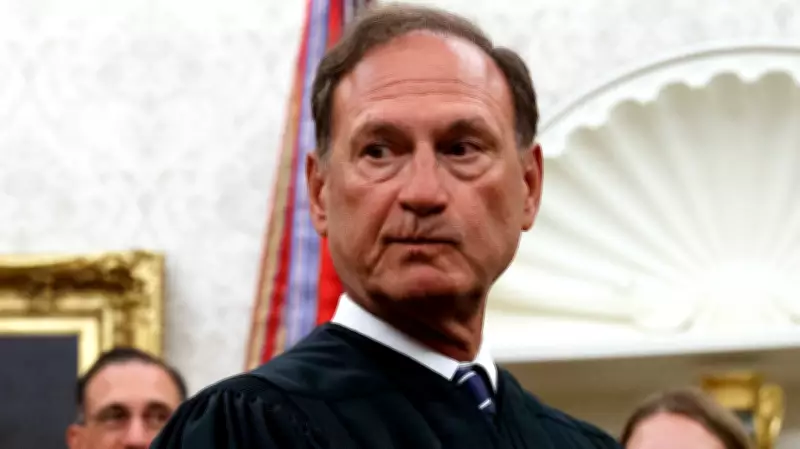
During oral arguments on Monday, Justice Samuel Alito articulated a fundamental skepticism. He suggested that accepting ballots after the designated day might inherently violate the concept embedded in the name "Election Day." Drawing a parallel to other national holidays, Alito argued that the phrase denotes a singular, specific day.
"If I have nothing more to look at than the phrase 'Election Day,' I think this is the day in which everything is going to take place, or almost everything," Justice Alito stated. "We have lots of phrases that involve two words, the second of which is 'day.' Labor Day, Memorial Day, George Washington's birthday, Independence Day, birthday, and Election Day. They are all particular days."

The case in question, Watson v. Republican National Committee, challenges a Mississippi state law. This law permits a grace period of five days for mail-in ballots to be received after Election Day in federal elections. Although it is a state statute, a ruling against it by the Supreme Court could potentially reshape voting procedures across the entire nation.
Conservative Justices Voice Broader Concerns
The court's conservative majority, which includes Justices Alito and Brett Kavanaugh, appears largely unconvinced by the law's legality. Their concerns extend beyond semantic arguments to issues of public trust and electoral integrity.
Justice Kavanaugh raised the specter of public disillusionment, warning that late-counted ballots could alter initial election results. "If the apparent winner the morning after the election ends up losing due to late-arriving ballots, charges of a rigged election could explode," Kavanaugh remarked, according to reports.
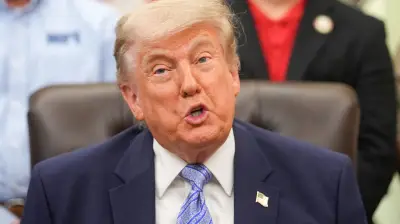
This judicial scrutiny occurs against a backdrop of intense political debate over mail-in voting. Former President Donald Trump has repeatedly called for an end to nationwide mail-in voting, alleging without substantiated evidence that it leads to widespread fraud. He has previously threatened to withhold support for legislation unless Congress outlaws the practice and mandates proof of citizenship for voters.
National Implications and Current State Practices
The outcome of this case carries significant weight for American democracy. Currently, approximately thirty states, along with Washington, D.C., have laws or policies that accept some ballots received after Election Day, provided they are postmarked by the deadline. These grace periods are designed to account for postal delays and ensure that every legally cast vote is counted.
As the Supreme Court deliberates, the core question remains: Does the principle of "Election Day" as a fixed, single day preclude the counting of ballots that arrive shortly thereafter, or does the need to count every valid vote justify these extended deadlines? The justices' decision will clarify the boundaries of state authority in administering federal elections and define the temporal limits of the voting process for years to come.