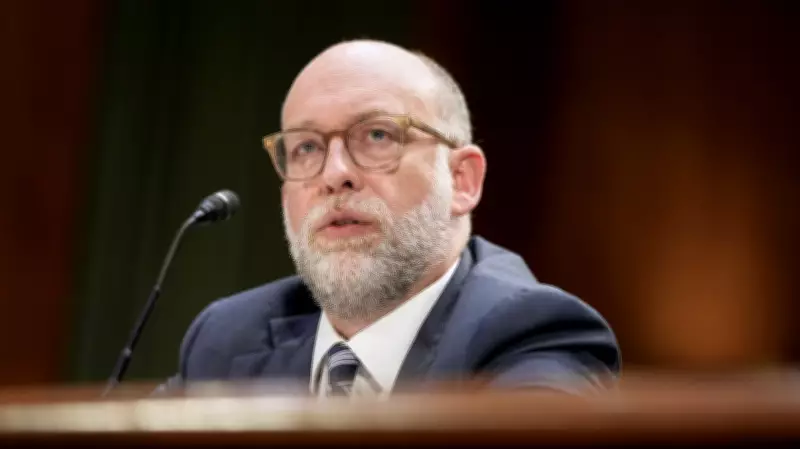
WASHINGTON (AP) — A push to accelerate U.S. weapons manufacturing and expand naval, aerial, and drone fleets will demand substantial initial funding, President Donald Trump's budget director informed a House committee on Wednesday. The testimony from Russell Vought initiates the White House's campaign to elevate defense expenditures to nearly $1.5 trillion in the upcoming fiscal year, a significant rise from the current year's approximate $1 trillion, concurrently reducing health research, heating aid, and numerous other domestic initiatives by around 10% in total. These reductions exclude mandatory spending, encompassing programs like Social Security and Medicare.
Partisan Clash Over Budget Priorities
The discussion over Trump's proposal highlighted the deep political rift influencing major policy deliberations ahead of a midterm election, where voters will ultimately determine the nation's course. "For the industrial base to double or triple and construct additional facilities, beyond merely adding shifts, it necessitates multiyear procurement agreements," Vought explained to legislators. "That expense must be accounted for in this initial year."
The White House is requesting about $1.1 trillion for defense via the standard appropriations procedure, which usually requires bipartisan backing for passage. An extra $350 billion would originate from a distinct bill that Republicans can advance independently through majority votes along party lines.

Democratic Opposition and Economic Concerns
Rep. Brendan Boyle of Pennsylvania, the committee's top Democrat, affirmed his support for a robust national defense but criticized the notion of boosting defense spending by over 40% while slashing essential programs. He asserted that this demonstrates the Republican administration's priorities are "out of whack."
Committee Chairman Rep. Jodey Arrington of Texas anticipated a more intense hearing, which materialized as he opened with remarks disparaging Democrat Joe Biden's presidency. Arrington claimed no president in his lifetime had "inherited such a complete and utter mess as President Trump did in January of last year," citing achievements like border security, tax reductions, and controlled nondefense spending.
The session quickly devolved into heated exchanges. Boyle retorted, "You know how bad this economy is when we hear Joe Biden being invoked, we hear trans people being invoked. I was waiting for Jimmy Carter to be blamed next." He highlighted declining consumer confidence under Trump and noted gasoline prices in Philadelphia soaring to $4.11 per gallon from under $3 six weeks prior, attributing it to Trump's "war of choice in Iran."
Criticism of Defense Spending and Health Care Trade-offs
Rep. Becca Balint, D-Vt., labeled the proposed defense increase shocking, stating, "We've never in the history of this country seen spending like this, paid for by slashing health care, education and housing." She pressed Vought on whether the $350 billion for the Iran conflict reduces costs for Americans, to which he responded indirectly, emphasizing full child care funding in the budget.
Balint incorporated Trump's "America First" slogan, arguing that $350 billion could finance enhanced health insurance tax credits for a decade and questioning war expenditures over health care affordability. Vought defended the president's stance, saying Trump is preventing Iran from obtaining nuclear weapons and strengthening its military to safeguard U.S. security, while pursuing diplomacy to eventually reduce costs.
Uncertain War Funding and Future Projections
Vought indicated uncertainty regarding current-year war funding, which would be part of an emergency supplemental bill atop the proposed defense boost. When asked by Rep. Veronica Escobar, D-Texas, if it exceeds $50 billion, he replied, "We're still working on it. I don't have a ballpark for you."
This budget debate sets the stage for contentious legislative battles, reflecting broader ideological divides on national security versus domestic welfare as the election approaches.