DUBAI, United Arab Emirates — In a significant diplomatic shift, President Donald Trump announced on Monday an extension of his deadline for Iran to reopen the crucial Strait of Hormuz to international shipping. The move delays potential U.S. strikes against Iranian power plants for five days, as both nations engage in what Trump described as "very good and productive conversations."
Escalating Tensions and a Temporary Reprieve
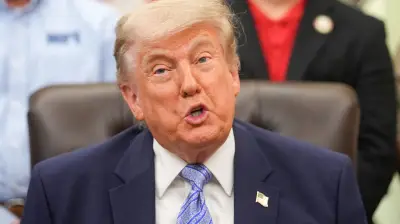
Trump's announcement, made via his Truth Social platform in all capital letters, came just hours before his self-imposed deadline was set to expire. He stated that discussions could lead to "a complete and total resolution" in the ongoing war, now in its fourth week, with talks continuing "throughout the week." However, the suspension of threats to attack power plants remains "subject to the success of the ongoing meetings and discussions."
Iranian state television quickly responded with a graphic declaring: "U.S. president backs down following Iran's firm warning." This reprieve unfolded against a backdrop of renewed military activity, as the United Arab Emirates reported its air defenses intercepting incoming Iranian fire on Monday afternoon.

Threats and Counter-Threats in a Volatile Region
Earlier on Monday, Iran had warned it would strike electricity plants across the Middle East and mine the Persian Gulf if Trump followed through on his threat to bomb Iranian power stations. The conflict has already seen several dramatic turning points, including the killing of Iran's supreme leader, bombings of key gas fields, and strikes on civilian infrastructure in Gulf Arab nations.
The war has resulted in more than 2,000 fatalities, according to various reports, with Iran's Health Ministry stating its death toll has surpassed 1,500. Additionally, 15 people have been killed in Israel by Iranian strikes, at least 13 U.S. military members have died, and over a dozen civilians have perished in the occupied West Bank and Gulf Arab states.
Global Economic Impacts and Humanitarian Concerns
The closure of the Strait of Hormuz, through which approximately one-fifth of the world's oil is shipped, has wreaked havoc on global markets. Oil prices have surged more than 50% since the conflict began, with Brent crude trading around $113 a barrel. Fatih Birol, head of the Paris-based International Energy Agency, warned that "no country will be immune to the effects of this crisis if it continues to go in this direction."
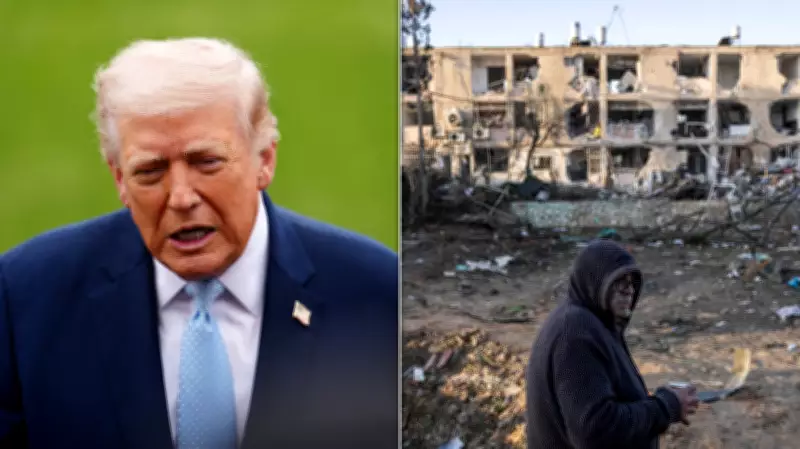
Beyond economic turmoil, there are grave humanitarian concerns. Potential attacks on power plants could cut electricity to vast populations in Iran and Gulf nations, while strikes on desalination facilities might deprive desert regions of drinking water. Jorge Moreira da Silva, a senior United Nations official, emphasized that "there is no military solution" to the crisis, noting "exponential price hikes in oil, fuel and gas" have disproportionately affected developing countries in Asia and Africa.
Military Developments and Diplomatic Denials
Israel launched new attacks on Tehran on Monday, targeting infrastructure in what it called "a wide-scale wave of strikes." Explosions were reported in multiple locations, though specific damage assessments were not immediately available. Concurrently, the U.S. has deployed additional amphibious assault ships and Marines to the Middle East, prompting Iran to warn against any ground invasion and threaten to mine access routes in the Persian Gulf.
Despite Trump's claims of productive talks, Iran's state-owned IRAN newspaper reported that the Foreign Ministry denied any negotiations have taken place with the U.S. Iranian Foreign Minister Abbas Araghchi confirmed speaking with his Turkish counterpart, Hakan Fidan, noting Turkey's historical role as an intermediary between Tehran and Washington.
Regional Spillover and Long-Term Implications
The conflict has extended beyond Iran and Israel, with Israel targeting Hezbollah in Lebanon and bombing bridges over the Litani River. Lebanese President Joseph Aoun condemned these actions as "a prelude to a ground invasion," while Egypt denounced them as "collective punishment" of civilians. Authorities report Israeli strikes have killed over 1,000 people in Lebanon and displaced more than 1 million.

U.S. Central Command chief Adm. Brad Cooper, in an interview with Iran International, accused Iran of launching missiles and drones from populated areas, suggesting those zones could become targets. He emphasized that U.S. and Israeli strikes aim to destroy Iran's military rebuilding capabilities, stating, "We're eliminating the threat of the future."
The widespread use of mines in the Persian Gulf, as threatened by Iran, could endanger commercial ships and complicate post-conflict recovery. Meanwhile, global supply chains are already feeling the strain, exemplified by South Korean chemical giant LG Chem shutting down a major plant due to disrupted naphtha supplies caused by the war.
As tensions remain high, the extended deadline offers a fragile window for diplomacy, but the region braces for potential escalation with catastrophic repercussions for civilians and the global economy.