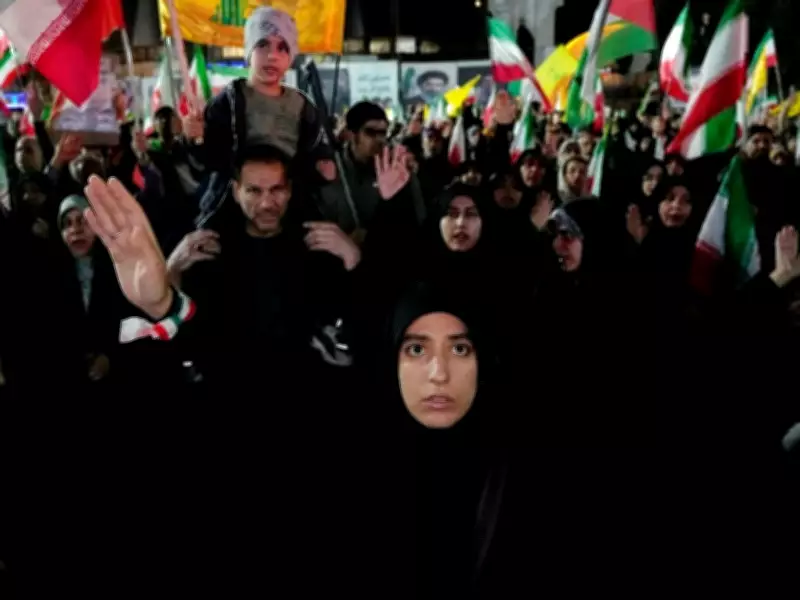
The Trump administration seemed unlikely on Tuesday to accept Iran's proposal to end the ongoing war and reopen the Strait of Hormuz if the United States lifts its blockade on the country. The offer would postpone discussions on Iran's nuclear program, a condition that U.S. Secretary of State Marco Rubio appeared to rule out entirely.
White House Response
The White House confirmed that President Donald Trump's national security team had reviewed the offer, and Trump is expected to address it later. The proposal emerged on Monday as Iran's Foreign Minister Abbas Araghchi visited Russia, a longstanding key backer of Tehran. It remains unclear what assistance, if any, Moscow might offer at this stage.
International Diplomacy
Pakistan Prime Minister Shehbaz Sharif briefed New Zealand Prime Minister Christopher Luxon by phone on Tuesday regarding Pakistan's diplomatic outreach aimed at promoting regional peace and de-escalation. Luxon expressed appreciation for Pakistan's efforts, including outreach to the United States and Iran, according to Sharif's office. Sharif thanked Luxon for his support and reaffirmed Pakistan's commitment to peace, dialogue, and regional stability.

U.S. Official Warns on Energy Security
A senior U.S. State Department official, Under Secretary of State for Political Affairs Allison Hooker, stated that Iran's "illegal behaviour" in the Strait of Hormuz should serve as a "wake-up call" for global energy security. Speaking at a gathering of Baltic, Black, and Adriatic Sea countries in Dubrovnik, Croatia, Hooker emphasized the need to diversify supplies and strengthen connections to avert future crises.
"Iran's illegal behaviour in the Strait of Hormuz should be a wake-up call for all of us with regard to the need to secure our supply chains and reduce our dependencies on unreliable countries and geographies," Hooker said. "We all need to do more. The world is changing under our feet."
Rubio's Stance
In a Fox News interview, Secretary Rubio was asked about Iran's latest proposal, which would end its chokehold on the Strait of Hormuz if the U.S. lifts its blockade and ends the war, while postponing nuclear talks. Rubio responded firmly: "There's no doubt in my mind that at some point in the future, if this radical clerical regime remains in charge in Iran, they will decide they want a nuclear weapon. That fundamental issue still has to be confronted. That still remains the core issue here."
When asked if he believed Iran was serious about a deal, Rubio described them as skilled negotiators aiming to buy time. "We can't let them get away with it. We have to ensure that any deal that is made, any agreement that is made, is one that definitively prevents them from sprinting towards a nuclear weapon at any point," he added.
The developments come amid heightened tensions in the region, with a giant billboard in Tehran depicting Iranian troops using a net to catch U.S. combat aircraft, as reported by AFP via Getty Images.