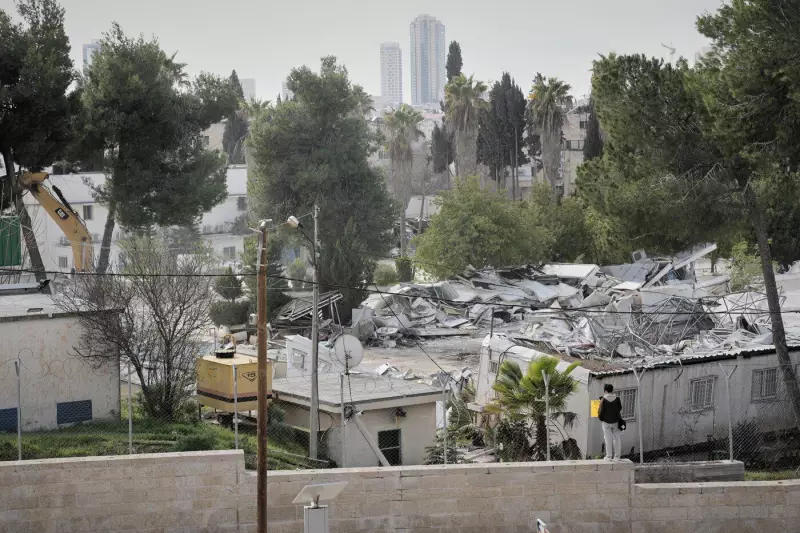
Israeli crews have initiated the demolition of a major United Nations compound in East Jerusalem, marking a significant escalation in regional tensions. On Tuesday, January 20, 2026, bulldozers moved into the headquarters of the UN Relief and Works Agency for Palestine Refugees (UNRWA), the primary UN body tasked with assisting Palestinian refugees.
Demolition of a Key UN Facility
The operation targeted the UNRWA compound located in the contested eastern sector of Jerusalem. The agency provides critical services, including education, healthcare, and social support, to millions of registered Palestinian refugees across the Middle East. The demolition of its administrative headquarters represents a direct strike against the agency's operational presence in the city.
Visual documentation from the scene, including photographs from The Associated Press, shows heavy machinery tearing into the structures. The Israeli government has not immediately issued a detailed public statement regarding the specific legal or security rationale for the demolition at this particular juncture.

Context of Ongoing Conflict and Regional Tensions
This action occurs within the broader and protracted context of the Israel-Hamas war, a conflict that has seen repeated cycles of violence and severe humanitarian consequences. The decision to physically dismantle a UN facility is a rare and severe step, likely to draw significant international criticism and complicate diplomatic efforts.
East Jerusalem, captured by Israel in the 1967 war and later annexed in a move not recognized by most of the international community, remains one of the core issues at the heart of the Israeli-Palestinian conflict. The presence and activities of UNRWA in the city have long been a point of contention with Israeli authorities.
Potential Repercussions and International Response
The demolition of the UNRWA headquarters is expected to have immediate and far-reaching consequences. Firstly, it disrupts the agency's ability to coordinate aid and services for a vulnerable population at a time of heightened need. Secondly, it risks further inflaming regional tensions and could provoke a strong reaction from Palestinian factions and allied states.
The international community, including key allies of Israel, will be closely monitoring the fallout. Such a move against a United Nations agency is unprecedented in recent years and will likely trigger urgent discussions at the UN Security Council and among donor nations that fund UNRWA's operations. The long-term impact on humanitarian aid channels and the already fragile political landscape in Jerusalem and the wider region remains uncertain.