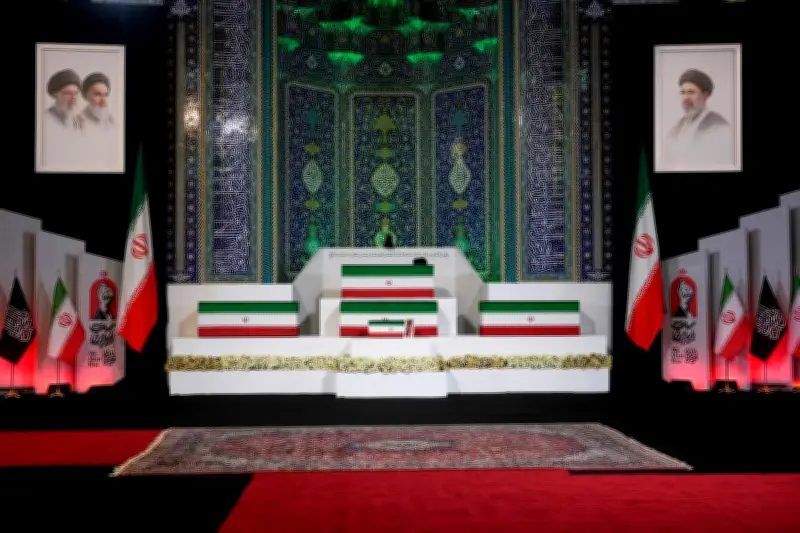
The coffins of slain Iranian Supreme Leader Ayatollah Ali Khamenei and members of his family were displayed at the Imam Khomeini Mosalla Grand Mosque in Tehran on Friday, July 3, 2026, as millions are expected to flood the capital for dayslong funeral ceremonies. Khamenei was killed in the ongoing Mideast conflict, according to The Associated Press.
Massive Funeral Procession Underway
The funeral, which began Friday, is expected to draw millions of mourners from across Iran and beyond. The coffins, with Khamenei's at the center, were placed on a platform for public viewing before the procession. Security forces have been deployed in large numbers to manage the crowds and maintain order.
Khamenei, who had been Iran's supreme leader since 1989, died amid escalating regional hostilities. His death marks a significant turning point in the conflict, raising questions about succession and Iran's future direction.

Impact on Regional Stability
According to analysts, Khamenei's death could further destabilize the region, as Iran's leadership structure faces uncertainty. The Supreme Leader holds ultimate authority over the country's military, foreign policy, and nuclear program. The funeral events are expected to last several days, with processions in Tehran and other major cities.
“This is a moment of profound change for Iran and the region,” said a Middle East expert. “The succession process will be closely watched by both domestic factions and international powers.”
International Reactions
World leaders have expressed condolences, while some have called for restraint amid the ongoing conflict. The United Nations has urged all parties to avoid further escalation. The funeral is also drawing attention to the humanitarian toll of the war, which has caused thousands of casualties and displaced millions.
As Tehran prepares for the influx of mourners, authorities have set up temporary camps and medical facilities. Public transportation has been expanded, and roads around the mosque are closed to traffic. The government has declared a national mourning period, with flags at half-staff and cultural events canceled.