Olympic Gold Medalists Spark Debate Over Presidential Recognition Disparity
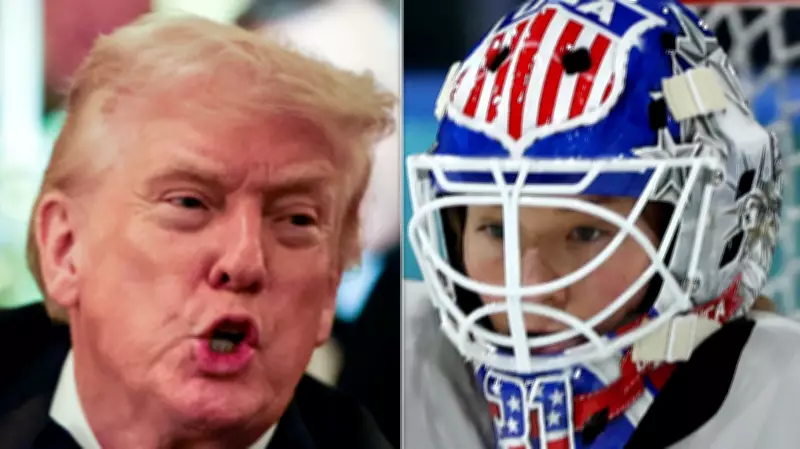
President Donald Trump's State of the Union address has ignited a firestorm of criticism from Team USA supporters, who are questioning why women's hockey goaltending sensation Aerin Frankel was overlooked for the Presidential Medal of Freedom while her male counterpart, Connor Hellebuyck, received the prestigious honor. The controversy centers on what many perceive as unequal treatment of Olympic champions based on gender, despite both athletes delivering historic performances at the Winter Games in Milan.
Frankel's Dominant Performance Overshadowed by Political Snub
Aerin Frankel's Olympic statistics tell a story of near-perfect goaltending that propelled the United States women's team to their third-ever gold medal since the sport's 1998 Olympic introduction. During the championship showdown against Canada, Frankel demonstrated extraordinary skill by stopping 30 of 31 shots in overtime, securing victory for her team. Her overall tournament performance was even more remarkable, with just two goals slipping past her out of 99 total shots, resulting in an exceptional .980 save percentage.
Frankel, alongside fellow goaltender Gwyneth Philips, maintained an undefeated record throughout the competition, showcasing consistency and resilience under pressure. Social media users quickly highlighted the disparity in recognition, with one observer noting that "he let in as many goals in the gold medal game as she let in the entire tournament," referring to Hellebuyck's performance relative to Frankel's nearly flawless record.

Hellebuyck's Recognition Amid Historic Victory
Connor Hellebuyck's Presidential Medal of Freedom award comes after his crucial role in ending a 46-year gold medal drought for the United States men's hockey team. During the Olympic final against Canada, Hellebuyck faced a barrage of 42 shots, successfully blocking 41 of them, including a spectacular save against Canada's Devon Toews that prevented what could have been a game-winning goal. His overall tournament statistics included stopping 131 of 137 shots, achieving a .956 save percentage during the undefeated gold medal campaign.
The men's team accepted President Trump's invitation to visit the White House and attend the State of the Union address, where Hellebuyck received his medal during the ceremony. This formal recognition has amplified questions about why Frankel, whose statistical performance surpassed Hellebuyck's in several categories, did not receive similar acknowledgment from the administration.
Social Media Outcry and Defensive Responses
The digital sphere has erupted with commentary about the perceived inequity. Prominent voices on platform X have expressed bewilderment at the administration's selective recognition, with one user questioning why Frankel wasn't honored when "she allowed only two goals during the Olympics" compared to Hellebuyck's five. Another commentator humorously noted Frankel's additional role as "a salad-based influencer," highlighting her multifaceted achievements beyond athletics.
However, some supporters of the administration's decision point to the women's team's refusal to attend the White House event as justification for the oversight. The team declined President Trump's invitation following what they perceived as a degrading joke about the obligatory nature of the invitation, though they officially cited scheduling conflicts. One social media defender argued that "the women's team turned down their invitation to the White House! They had all the opportunity in the world but chose a different path."
President Trump has indicated that the women's team will receive White House recognition "soon," though specific details about potential honors for Frankel remain unclear. This ongoing controversy raises broader questions about gender equity in sports recognition and how political administrations choose to celebrate athletic achievements on the national stage.