In the Twin Cities of Minnesota, a massive federal immigration enforcement operation has plunged communities into fear and sparked widespread resistance. The deployment, which began after a fatal shooting by an Immigration and Customs Enforcement (ICE) agent, has been marked by allegations of brutality, unlawful tactics, and a profound impact on daily life.
A Pattern of Aggressive Enforcement and Injury
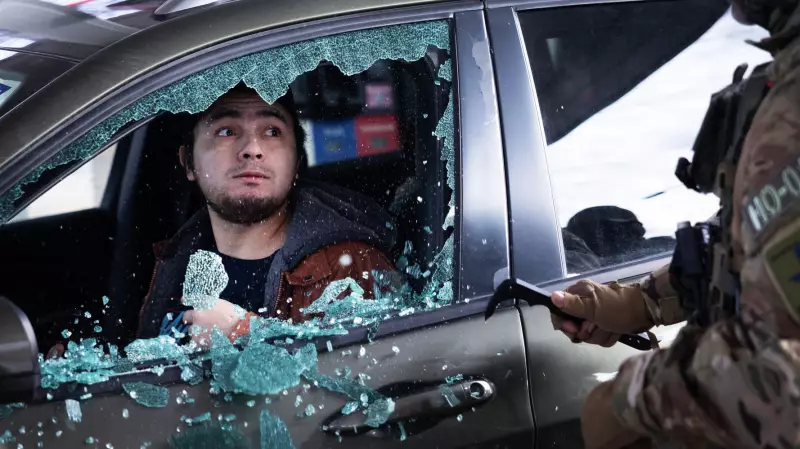
The situation escalated rapidly after ICE agent fatally shot Renee Good in Minneapolis on January 7, 2026. Just four days later, on Sunday, January 11, a dozen masked U.S. Border Patrol officers swarmed the vehicle of Orbin Mauricio Henríquez Serrano at a Speedway gas station in St. Paul. Agents demanded he show his papers and, when he did not immediately comply, shattered his car window, dragged him out, and pressed on his neck until he lost consciousness.
His sister, Consuelo, watching video of the arrest the next day, feared he was dead. She later confirmed he had survived but was severely injured and had been transferred to a notorious detention tent camp in Texas. “He only managed to tell me that he is very injured,” she told HuffPost in a brief phone call.

This incident is not isolated. The Trump administration has flooded Minnesota with force, deploying 800 Border Patrol and 2,000 ICE officers to the Minneapolis area—a contingent five times larger than the city's own police force. President Donald Trump has further threatened to invoke the Insurrection Act, which could send the U.S. military to police the streets.
Community Terror and Organized Resistance
The surge of federal agents has created an atmosphere of terror, particularly for immigrant communities. Many residents now carry proof of citizenship at all times. A registered nurse reported pregnant patients are too afraid to seek prenatal care, while a school administrator said children are asking what to do if ICE arrives at their school. Businesses like Mercado Central have seen a dramatic drop in customers.
Despite this, a robust community resistance has organized. Volunteers track suspicious federal vehicles—identified by out-of-state plates, masked occupants, and reckless driving—and use group chats to mobilize. When agents are spotted, caravans of cars and crowds of pedestrians quickly form, blaring horns and shouting.
Federal agents have responded with threats, pepper spray, tear gas, and flash-bang grenades. “To us, these are red coats,” said attorney Chris Lund, referencing colonial-era British soldiers. “These are imperial agents that are here to hurt us.” The orange stain of pepper spray has become a badge of pride for some, symbolizing their stand against the operations.
Leadership and Tactics Under Scrutiny
Much of the operational leadership falls to Border Patrol Commander Gregory Bovino, who has a documented history of allegations regarding police brutality and racial profiling. Federal judges in California and Illinois have previously attempted to restrain his conduct. In Minnesota, he has been a vocal and controversial figure.
After an agent shot and killed Renee Good, Bovino publicly said “hats off” to the shooter. In a local interview, he warned about “weaker-minded people” falling victim to the rhetoric of local leaders like Governor Tim Walz. His agents have been filmed tackling U.S. citizens for taunting them, with one young man later dropped off miles away, sobbing and bleeding from the encounter.
Agents have broken down a door without a judicial warrant, deployed chemical irritants near a school, and dragged a disabled woman screaming from her car window. At the fortified Whipple Federal Building, which serves as a base, agents regularly fire less-lethal munitions at protesters.
The trauma is deep and historical. Josefina Catalan, 51, whose mother was deported when she was a child, sees her own past in the current fear. “I understand the feelings of the children at this moment,” she said, referring to Good's kids. “They’re going through the nightmare I went through.”

At makeshift memorials and daily protests, the anger is palpable. Retired Air Force Staff Sgt. James McGuiggan expressed the disillusionment of many: “Everything I feel like I did was for nothing, because now they’re doing this shit to people — shooting American citizens just for trying to protect people.” As the federal occupation continues, the standoff between overwhelming force and determined community resistance defines a new and tense reality for Minnesota.