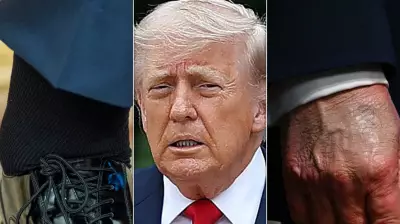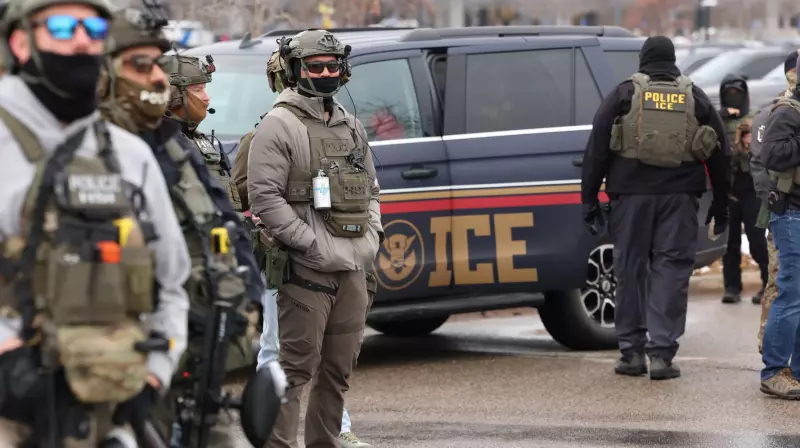
In the wake of a fatal shooting involving an Immigration and Customs Enforcement (ICE) agent, officials within a local office convened a meeting to address critical safety protocols. The session, prompted by the death of Renee Good, who was shot by ICE agent Jonathan Ross in Minneapolis, focused on a fundamental rule: avoid standing in front of vehicles.
A Deadly Confrontation and Its Aftermath
The meeting's impetus was clear. Renee Good was killed during a traffic dispute in her neighbourhood. Agent Ross had walked around and positioned himself directly in front of her car while filming with a cellphone. As another agent reached into her driver's side window, Good turned her steering wheel away from Ross. She appeared to be attempting to drive away when Ross opened fire.
An agent present at the subsequent briefing, who spoke to HuffPost on condition of anonymity, revealed the guidance given. "We were briefed on avoiding standing in front of cars, wherever possible," the agent said. Colleagues were also instructed to advise partner agencies to follow the same rule. The directive emphasized that if a vehicle is determined to leave an incident scene, agents should let it go, log the license plate, and report it for later apprehension.

"They train us that vehicles are deadly weapons and so we need to be cautious around them," the ICE agent stated. "Not standing in front of vehicles, especially when the driver is still there, is common sense." It remains unclear if similar briefings occurred at other ICE offices nationwide.
Experts Condemn Agent's Positioning
The internal meeting suggests unease within the agency about Ross's actions. This concern is echoed by seasoned law enforcement professionals. Eric Balliet, a former federal agent who oversaw use-of-force investigations for Homeland Security Investigations, told CBS News that Ross crossed and stayed in front of an occupied, running vehicle. "You should not be intentionally putting yourself in front of a vehicle unless absolutely necessary," Balliet said.
Gil Kerlikowske, former commissioner of U.S. Customs and Border Protection and ex-chief of the Seattle Police Department, was unequivocal in his assessment to The Washington Post. "You never should put yourself in that position in front of or behind the car," he stated, noting that city police officers are well-versed in this principle. He further suggested that the current, more aggressive immigration enforcement actions under the second Trump administration deviate from historical training.
The anonymous ICE agent echoed this sentiment, highlighting a training gap. While the cause of the initial confrontation is unclear, the agent said, "that's not what we are trained to do... We don't have riot training." Many agents now operating in U.S. cities were previously stationed at the border or focused on targeted criminal operations, not broad public interactions.
A Troubling Pattern and Heightened Risks
Ross's background adds crucial context. He served in the Border Patrol from 2007 to 2015. A 2014 independent report by the Police Executive Research Forum, covering Border Patrol shootings from 2010 to 2012, identified a disturbing trend. The report found suspicion that in many vehicle shootings, agents intentionally placed themselves in a vehicle's path to justify using deadly force.
Furthermore, just weeks before the Minneapolis shooting, Customs and Border Protection issued a memo on vehicle extraction operations, advising personnel to "safely block the target vehicle with other vehicles" and avoid unsafe positioning, as reported by journalist Ken Klippenstein.
The ICE agent who spoke to HuffPost did not believe Ross's life was in imminent danger when he fired. However, the agent expressed deep concern about the broader implications of deploying a large force of immigration agents in public spaces. "Any one of us could have been in that situation, could have panicked, could have pulled the trigger," the agent said, underscoring the elevated risk of shootings as these interactions multiply.

The Department of Homeland Security, through spokesperson Tricia McLaughlin, declined to address specific questions about the safety briefing. In a statement, she said "our officer acted according to his training" and listed Ross's credentials, leaving the fundamental questions about training and protocol unanswered.