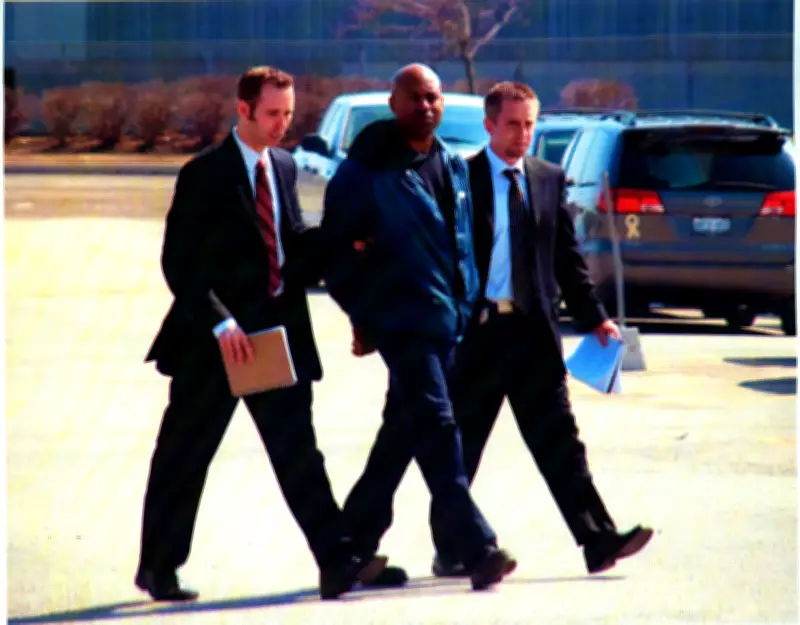
Toronto Restaurant Owner's Killer Denied Early Parole Hearing
In a recent ruling, a Superior Court judge has denied Andrew Campbell's request for an early parole hearing, citing his lack of genuine remorse for the 2009 murder of Toronto restaurateur George Koutroubis. Campbell, now 60, was convicted of first-degree murder in 2011 and sentenced to life in prison with no parole for 25 years, but sought a "faint hope" hearing after serving 15 years.
Details of the Crime
The case dates back to 2009, when George Koutroubis, a 36-year-old co-owner of Six Steps Restaurant on Colbourne Street in Toronto, went missing just before his honeymoon. After a five-day search, his body was discovered in the trunk of his BMW SUV in Brampton, approximately 80 kilometers from his home. Campbell, a janitor and drug dealer at St. Lawrence Market, had lured Koutroubis to Whitby under the pretense of collecting a $27,000 gambling debt, only to shoot him four times at close range.
Following the murder, Campbell attempted to establish an alibi by involving his 17-year-old son, but this quickly unraveled. He was convicted after just four hours of jury deliberation and received an automatic life sentence.

Judge's Ruling on Parole Application
In her judgment, Superior Court Justice Jennifer Woollcombe evaluated Campbell's application for a "faint hope" hearing, which requires demonstrating a "reasonable prospect" of convincing a jury that he has reformed. Despite Campbell's recent admission of guilt—after years of claiming self-defence—the judge found his remorse to be insincere and opportunistic.
Justice Woollcombe noted that Campbell only admitted to the murder in 2025, coinciding with his parole application, and even then, he partially blamed his upbringing in Jamaica for his actions. The judge dismissed this justification, pointing out that Campbell left Jamaica at age nine and that such reasoning was an attempt to deflect responsibility.
"His late-breaking remorse and acceptance of responsibility would inevitably be seen by any jury as a transparent and feigned attempt," Justice Woollcombe wrote in her decision.
Impact on the Victim's Family
The ruling also highlighted the ongoing devastation experienced by Koutroubis's family. In victim impact statements, his widow described how the murder continues to affect her daily, despite her efforts to move on with remarriage and children. She emphasized that no justice could replace her husband's lost life.
Justice Woollcombe concluded that the horrific nature of the crime, combined with Campbell's post-murder conduct and the profound impact on the family, made it unlikely for a jury to grant him early parole. She stated that Campbell had not shown compelling changes in character to warrant mercy.
This decision underscores the challenges in parole applications for violent offenders and the judicial emphasis on genuine rehabilitation and accountability in such cases.