A Pakistani court has delivered a landmark and severe verdict, sentencing a group of journalists, social media content creators, and former military officers to life imprisonment. The charges stem from accusations of inciting violence during the widespread and often chaotic protests that erupted following the arrest of former Prime Minister Imran Khan in 2023.
The Verdict and the Accused
The court found the defendants guilty of using their platforms to deliberately provoke unrest. The group includes several prominent journalists known for their critical reporting, popular YouTubers with large followings, and a number of retired military personnel. The prosecution argued that their rhetoric and calls to action directly contributed to the violent clashes that shook the country.
The sentencing took place on January 2, 2026, marking a significant moment in Pakistan's ongoing political and social turmoil. The case has been closely watched both domestically and internationally, highlighting the tense relationship between the state, the media, and dissenting voices.

Context: The 2023 Protests and Crackdown
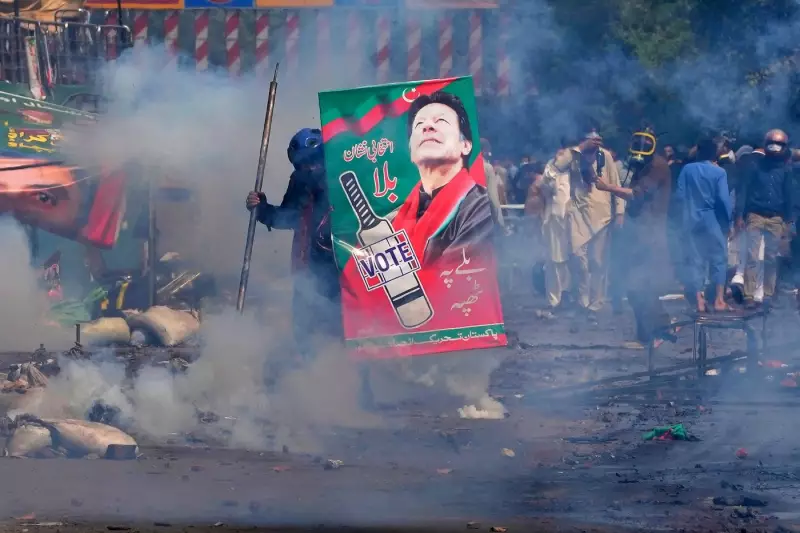
The charges are directly linked to the massive protests that broke out in March 2023 after the dramatic arrest of then-opposition leader Imran Khan. Supporters of Khan's Pakistan Tehreek-e-Insaf (PTI) party took to the streets across major cities, including Lahore.
As seen in an Associated Press photo from March 15, 2023, the demonstrations frequently turned violent. The image shows Khan's supporters taking cover as riot police fire tear gas to disperse crowds in Lahore. The government at the time launched a widespread crackdown, arresting thousands of PTI workers and supporters, and now, years later, has pursued legal action against those deemed to have instigated the violence.
Implications for Press Freedom and Dissent
This verdict is likely to send shockwaves through Pakistan's media landscape and civil society. Advocacy groups for press freedom have repeatedly expressed concern over shrinking space for dissent and increasing pressure on independent journalists in the country.
The life sentences handed to media professionals and commentators set a stark precedent. Critics of the government argue this is a tool to suppress opposition and critical reporting, while authorities maintain it is a necessary legal response to those who threaten public order and national security. The severity of the punishment underscores the government's hardline approach to managing political dissent and controlling narrative, especially on digital platforms like YouTube.
The long-term consequences of this case will be significant, potentially chilling investigative journalism and open political discourse in Pakistan. It also raises serious questions about the judicial process and the application of laws related to sedition and incitement in a highly polarized political environment.