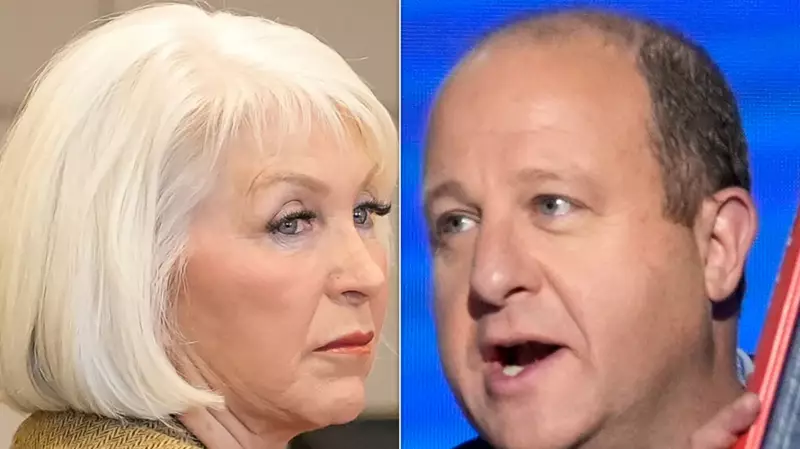
Colorado's Democratic Governor, Jared Polis, has revealed he is actively considering granting clemency to Tina Peters, the former Mesa County clerk currently serving a prison sentence for her involvement in a sensitive data breach. The breach was orchestrated in an attempt to substantiate unfounded claims of fraud in the 2020 presidential election favouring former President Donald Trump.
A Harsh Sentence Under Review
In a recent interview with CBS Colorado, Governor Polis characterized the nine-year sentence handed to Peters as "harsh." He explained that his administration routinely examines sentences, particularly for older inmates. "We always look at people’s sentences, and when you have people that are elderly... how much of a threat to society are they?" Polis stated. He emphasized the need to balance justice with compassion, ensuring that individuals who pose minimal risk can spend their final years at home.
Tina Peters, who is 70 years old, was convicted on state charges in 2024. Her conviction stemmed from a scheme where she facilitated unauthorized access to voting system data, driven by election denial narratives surrounding the 2020 contest. The case became a flashpoint in the ongoing national debate over election integrity.

Trump's Pardon Power Hits a State Wall
In December, former President Donald Trump attempted to intervene directly. On his Truth Social platform, he announced he was issuing a full pardon to Peters, declaring she was imprisoned for the "'crime' of demanding Honest Elections." However, this proclamation held no legal weight in Peters' situation.
Presidential pardon powers are limited to federal offenses. Since Peters was tried and convicted under Colorado state law, Trump had no authority to release her. This legal limitation did not stop Trump from escalating his rhetoric. On New Year's Eve, he launched a furious attack on Governor Polis and a local Republican district attorney for not honouring his symbolic pardon, using harsh language and reiterating baseless claims about mail-in voting systems.
Clearing the Path for Parole and Pardon
Following the governor's comments, Twenty-first Judicial District Attorney Dan Rubinstein clarified to Colorado Public Radio that, to his knowledge, Polis has not made a final decision and intends to consult with various parties first. Meanwhile, Peters' legal situation has other potential avenues.
According to state corrections policy, Peters is eligible for parole in approximately two years. Separately, her attorney, Peter Ticktin, confirmed he has already submitted a formal pardon request to the governor's office. Ticktin expressed gratitude for Polis's review, stating, "Governor Polis is correct. The sentence was harsh. We are thankful that he is looking at this more fairly."
The case continues to underscore the complex intersection of state justice, political clemency, and the enduring fallout from the 2020 election.