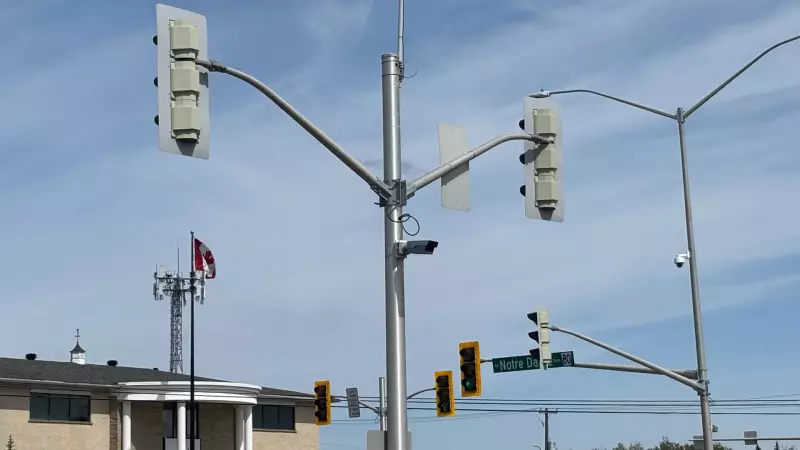
Police in Greater Sudbury have significantly expanded the use of automated licence plate recognition (ALPR) technology, with cameras now operating at more than a dozen key locations across the city. The system, which scans and checks vehicle plates in real-time, is active at 16 separate intersections as part of a ongoing initiative to bolster traffic safety and law enforcement capabilities.
Network Deployment and Operational Details
The expansion places Greater Sudbury among a growing number of Ontario municipalities integrating this technology into daily policing. The cameras, mounted at strategic intersections, automatically capture licence plate data. This information is instantly cross-referenced against police databases for alerts related to stolen vehicles, expired registrations, Amber Alerts, or vehicles associated with individuals wanted for serious offences.
The activation of these 16 sites follows a period of testing and evaluation. Police officials emphasize that the primary goal is to improve efficiency and officer safety by automating a task previously done manually, allowing officers to focus on higher-priority responses.

Balancing Safety with Privacy Protections
While the technology offers clear public safety benefits, its deployment is accompanied by discussions concerning data privacy. Police assure that the system is used in compliance with strict provincial privacy guidelines. Data from plates not linked to any active alert is typically deleted within a short, regulated timeframe, often within minutes or hours, unless required as part of an active investigation.
A privacy impact assessment was conducted prior to the full rollout. Authorities state that the system is designed to minimize privacy intrusion, targeting only vehicles that are already of legitimate interest to police. The small risk to privacy, as characterized by officials, is weighed against the potential to quickly locate stolen cars or apprehend dangerous individuals.
Future of Surveillance and Community Impact
The establishment of this fixed network in Greater Sudbury marks a shift towards more pervasive, always-on surveillance infrastructure in public spaces. Community reaction has been mixed, with many residents supportive of tools that combat crime, while civil liberty groups urge ongoing transparency and oversight.
The success of this network in Greater Sudbury could influence adoption rates in other northern Ontario communities. Police services across the region are closely monitoring the results, including any measurable impact on crime rates and investigative outcomes.
For now, the 16 intersections equipped with ALPR cameras represent a new layer of digital monitoring in the city's landscape. The technology's evolution and its long-term effects on both community safety and civil liberties will continue to be a subject of public and policy discourse.