Edmonton Police Chief Faces Mounting Pressure Over Controversial Israel Visit
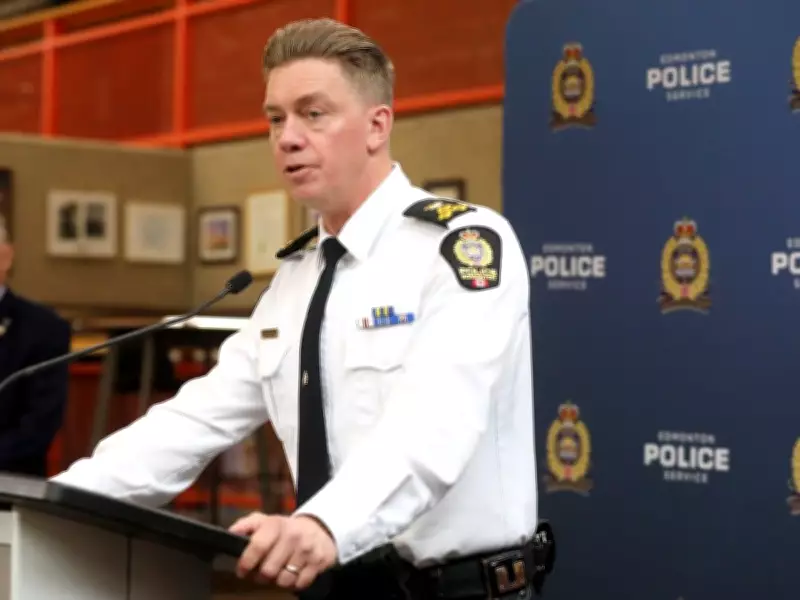
Edmonton Police Chief Warren Driechel is confronting significant criticism and escalating demands for his resignation following revelations about his recent trip to Israel. The controversy has sparked a heated community response, with numerous religious and civic organizations expressing deep concern about the timing and implications of the police chief's international visit.
Community Coalition Demands Transparency and Accountability
The National Council of Canadian Muslims (NCCM) spearheaded a formal open letter to the Edmonton Police Commission on Wednesday, seeking comprehensive explanations about Chief Driechel's February journey to Israel. This letter gained substantial support, receiving endorsements from approximately two dozen religious and community organizations, including Edmonton's prominent Al Rashid Mosque.
The coalition's letter presents a forceful critique of the police chief's decision-making, stating: "At a time when countless families in Edmonton are grieving the devastating violence unfolding in Gaza and the region more broadly, the decision by the Chief of Police to travel to Israel to meet with policing institutions demonstrates a serious failure of judgment toward the communities he is sworn to serve and protect."

Erosion of Community Trust During Critical Period
The organizations emphasized that the Israel visit has "significantly undermined trust in the leadership of the Edmonton Police Service at a moment when trust between police and communities is more important than ever." They issued a stark ultimatum, declaring that without "satisfactory answers" about the trip's purpose and approval process, "we collectively believe that the only acceptable answer would be to ask for the resignation of the chief."
Chief Driechel, who assumed his position in September, disclosed during a CityNews interview that he traveled to Israel in mid-February as part of a delegation organized by the Major Cities Chiefs Association. This professional organization represents police executives across the United States and Canada and reportedly conducts such trips "on a semi-regular basis," according to EPS spokesperson Cheryl Voordenhout.
Police Service Defends Educational Nature of Visit
In response to mounting criticism, police officials have defended the trip's educational objectives. Voordenhout clarified that Driechel's participation received approval from police commission chair Ben Henderson and was "entirely sponsored" by the chiefs' association. She emphasized that delegates did not meet with representatives from the Israeli military or government during their visit.
"The purpose of the trip was educational, and no contracts, equipment or training were procured during the trip," Voordenhout stated. "The police chiefs attending the trip had the opportunity to gain insights into local policing in a highly complex environment, including critical incident response, threat preparedness, and community engagement."
Specific Demands for Clarification and Action
The signatories to the NCCM letter have presented the police commission with several specific questions requiring immediate attention:
- How the commission determined that a trip to Israel "was in the best interest of Edmonton's public safety"
- What lessons learned during the visit might be implemented within Edmonton's policing framework
- What concrete steps are being taken to address "the loss of confidence that this decision has created" within affected communities
The letter acknowledges that "the trip has been described as an opportunity to study high-level emergency management, counterterrorism, and cybersecurity," but raises fundamental questions about "what values and policing practices are being learned, and where those practices have any place in Edmonton."
This developing situation places significant pressure on both police leadership and the oversight commission, as they navigate complex community relations during a period of heightened sensitivity regarding international conflicts and their domestic implications. The outcome of this controversy may have lasting effects on police-community relations in Edmonton's diverse metropolitan area.