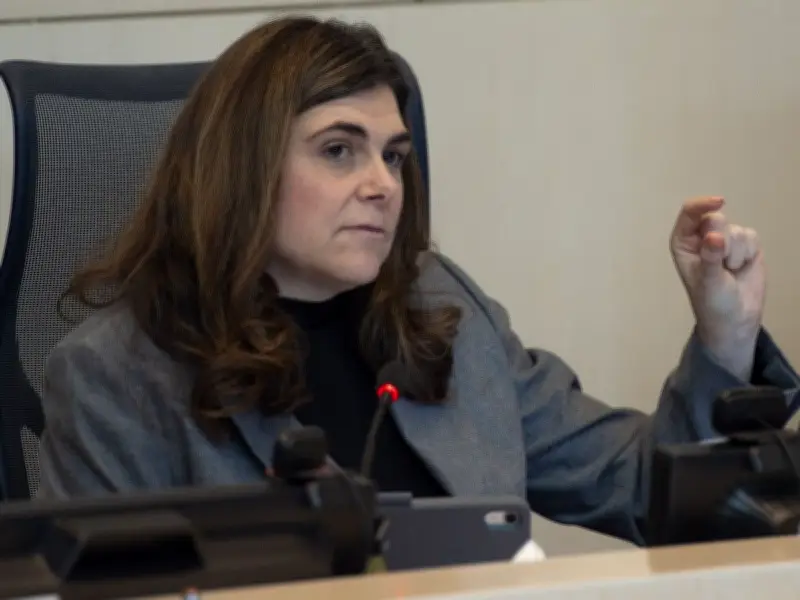
Edmonton city council voted Tuesday to create a dedicated renewal fund reserve, addressing a $2.8-billion shortfall in capital investment for crumbling assets over the next three years. The move will incrementally increase the tax rate by half a percentage point each year, eventually accelerating to a one per cent hike annually starting in 2033.
Council approves dedicated renewal fund reserve
The decision, made during a council meeting, establishes a reserve to fund the renewal of existing city assets, as approved through the capital budget process. The money will be used either to replace an asset with a modern equivalent or to repair it and extend its service life. The fund can also supplement other funding mechanisms, such as the facility lease renewal and replacement reserve, fleet services, vehicle replacement reserve, and neighbourhood renewal.
Nancy Chow, acting director of budget, planning, and development, noted that discussions about a dedicated renewal fund reserve have been ongoing since 2013, when council first asked administration to explore funding options. The groundwork for the current plan was laid in March 2025, when council approved tax levy increases of 0.5 per cent from 2027 to 2029, 0.75 per cent annually from 2030 to 2032, and one per cent annually from 2033 onwards until target funding levels are achieved.

Renewal gap and provincial funding decline
Ward Anirniq Coun. Erin Rutherford highlighted a current renewal gap of nearly 75 per cent. “It’s not that we’re willfully doing that gap, it’s that there’s no more funding and money to be had,” she said. She pointed to declining provincial funding, noting that highway fund increases are constrained. “What we really need as a municipality is both this and the province to come to the table with more funding for renewal to really be able to get our assets back where we need them to be, and continue to grow as we know the city will continue to grow,” Rutherford added.
Some renewal funds are already dedicated from the outset. “We obviously have a lot of bridges in the city, and those bridges understandably need to be funded to 100 per cent of their renewal, because we cannot have a catastrophic bridge failure. That money is locked in,” Rutherford said. Competing assets—including transit, roads, parks and open spaces, facilities, fleet, Edmonton Public Library, and Edmonton Police Service—each have their own renewal demands, she noted.
Future enhancements and tax implications
Council will revisit the fund in the fall, when city administration presents an additional “enhancement” that would necessitate even more tax hikes. The dedicated renewal fund reserve is designed to accumulate until a minimum balance is achieved, after which funds will be directed to the reserve. “Once the minimum balance is achieved, the funds will be directed to the dedicated renewal fund,” Chow said.
The incremental tax increases are intended to gradually close the $2.8-billion shortfall while minimizing immediate fiscal impact on residents. However, the additional enhancement expected in the fall could accelerate the tax burden further. The city’s infrastructure renewal needs have been a long-standing issue, with provincial funding declining over the years, leaving Edmonton to explore new revenue tools to maintain essential assets.