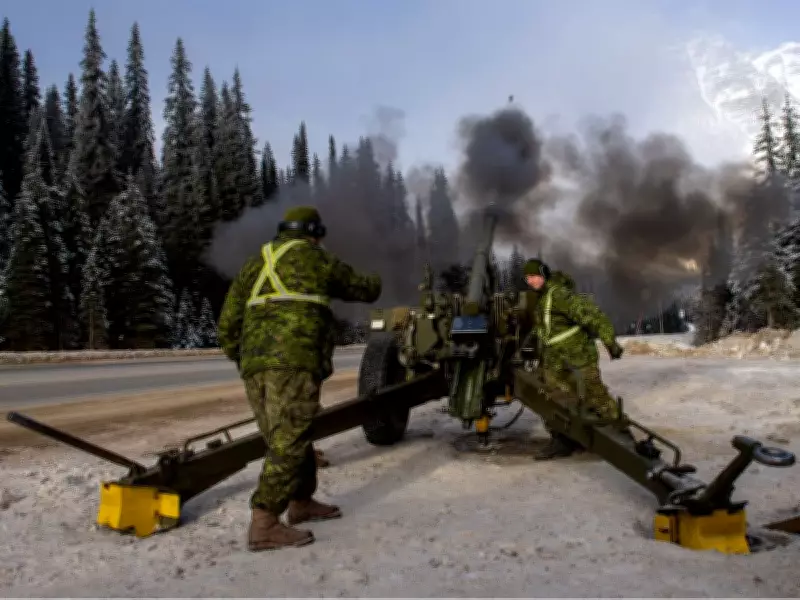
Canada's top general is shutting down a key operation that has kept avalanches under control along the Trans-Canada Highway in the Rocky Mountains for over 50 years, citing significant resource pressures. The decision comes despite a massive increase in defence spending by the Liberal government.
Operation PALACI to End
Chief of the Defence Staff Gen. Jennie Carignan has informed Parks Canada that she will not renew the agreement to conduct avalanche control operations in Glacier National Park and Rogers Pass. The memorandum of understanding is set to expire on Aug. 17, 2027. Operation PALACI, which costs about $1 million annually, involves a small team of soldiers using artillery to trigger controlled avalanches and reduce snow buildup.
In a letter dated Nov. 18, 2025, to then-Parks Canada President Ron Hallman, Carignan wrote: “We have given serious consideration to the importance of this operation. However, the CAF continues to face significant resource pressures while the global geopolitical situation continues to rapidly evolve. Regrettably, the situation has not improved while the demands on our resources have continued to increase despite recent investments.”

Critical Economic Corridor
More than 4,000 vehicles and up to 40 trains travel through the Rogers Pass corridor in British Columbia each day. The corridor is vital to Canada's economy, and the economic cost of a highway closure due to an avalanche can be as high as $3 million per hour. Rogers Pass has the highest avalanche hazard index rating in Canada and the third highest in North America, with over 130 avalanche paths crossing the Trans-Canada Highway.
Increased Defence Spending
The Liberal government under Prime Minister Mark Carney has committed to spending $81.8 billion on defence over the next five years, as unveiled in a budget on Nov. 4, 2025. Despite this, Carignan cited ongoing resource pressures. Defence Minister David McGuinty's office did not respond to a request for comment.
Department of National Defence spokesperson Daniel Blouin confirmed in an email that the memorandum of understanding will not be renewed. “In 2025, the CAF officially communicated to Parks Canada that they would not renew the avalanche control MOU beyond its expiry in August 2027 due to evolving defence modernization priorities and operational imperatives, and the planned divestment of the legacy artillery systems currently used in support of Parks Canada,” Blouin noted. “The CAF also signalled its intention to assist Parks Canada to plan this transition to meet Parks Canada's needs while reducing pressure on the CAF before the MOU expires.”
Historically, avalanches have caused significant fatalities in Canada. Between 1885 and 1916, more than 250 railway workers died due to avalanches, according to Parks Canada.