Government Policies Deliberately Keep Disabled Citizens in Poverty
Two Ottawa residents have penned powerful letters to the editor criticizing government policies that intentionally keep vulnerable populations in poverty while highlighting the ongoing stagnation surrounding official residences.
ODSP Payments Fall Drastically Below Poverty Threshold
Robert Broatch of Ottawa expresses profound dismay at the Ontario government's approach to disability support, describing it as "intentionally inflict[ing] poverty on the most vulnerable in our society." He emphasizes that this situation has persisted for an extended period without meaningful intervention from provincial authorities.
The stark reality emerges from examining the actual numbers: In Ottawa, a single person earning less than $26,000 annually is officially classified as living below the poverty line. However, individuals receiving Ontario Disability Support Program benefits receive only $21,336 per year, creating a significant shortfall that forces recipients into impossible financial circumstances.

The monthly breakdown reveals the impossible arithmetic:
- Basic needs allowance: $809.00
- Shelter allowance: $599.00
- Other expenses: $370.00
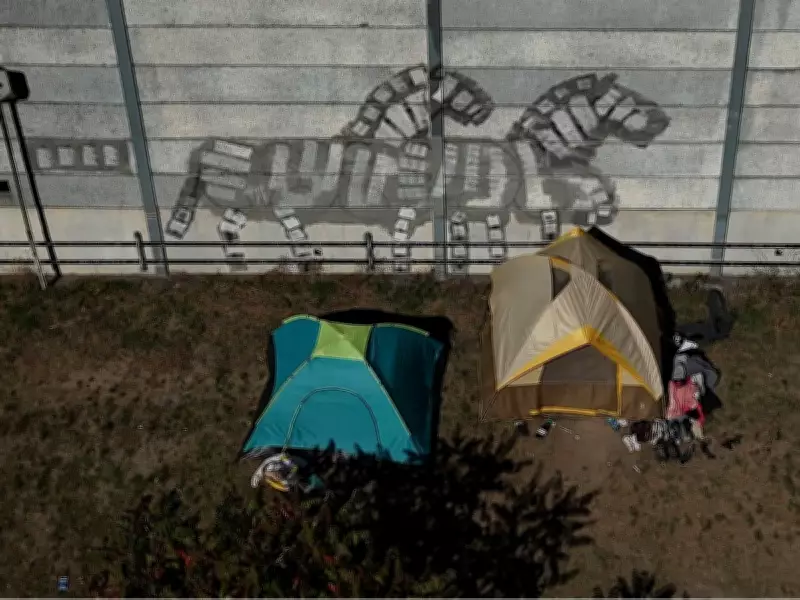
This totals $1,778 monthly, which Broatch questions as "remotely reasonable" given Ottawa's high cost of living. He directly connects these inadequate support levels to the visible growth of Ottawa's homeless population, arguing that intentionally maintaining people below the poverty line represents "cruel and heartless" policy-making.
Parallel Concerns About Government Inaction on Official Residences
John Pomeroy of Chelsea, Quebec addresses a separate but related issue of government indecision regarding 24 Sussex Drive, the official prime ministerial residence. He expresses frustration with the prolonged debate about the property's future while the building deteriorates further with each passing year.
Pomeroy proposes several practical solutions that have apparently not been seriously considered, including expanding onto adjacent Governor General's residence grounds, which he notes contains "plenty of undeveloped acreage" that could address space and security concerns while maintaining proximity to Parliament Hill.
Regarding heritage designation concerns, Pomeroy takes a pragmatic approach: "If it is a heritage piece but it is not suitable in both its size and the scope for its purpose, then tear it down and recycle whatever can be re-used in a new, more efficient, more secure, and more functional design."
He emphasizes the escalating costs of continued delay, noting that "the cost of renovation/construction is only going to go up" after "too many costly studies and not enough decisions." Pomeroy agrees with previous suggestions that any new design should reflect Canadian values—"something we can be proud of, strong, secure, understated, environmentally friendly, welcoming, practical, functional and natural"—qualities he believes the current property fails to embody.
Broader Implications of Government Paralysis
Both letters highlight a concerning pattern of government inaction affecting different aspects of Canadian society. While Broatch focuses on the human cost of inadequate social support systems, Pomeroy addresses the symbolic significance of neglected national infrastructure.
Broatch makes a compelling moral argument: "There will always be a fraction of the population who need support. That will never change, but intentionally offering a life living below the poverty line is cruel and heartless." He concludes with a hopeful assertion that "We as a society are better than that," challenging both policymakers and citizens to demand better treatment for vulnerable community members.
Pomeroy's frustration culminates in a simple directive regarding 24 Sussex Drive: "Just get on with it!" He suggests alternative uses if the residence cannot be effectively renovated, including converting it to parkland, integrating it into security complexes, or leasing it as embassy grounds.
These parallel critiques reveal systemic issues in government responsiveness and decision-making, with both writers calling for urgent action rather than continued study and delay that ultimately costs taxpayers more while failing to serve public needs effectively.