MLB's Automated Umpire System Triggers Historic First Ejection in Heated Game
Major League Baseball's newly implemented Automated Ball-Strike system has generated its first managerial ejection, creating dramatic controversy during Sunday's matchup between the Minnesota Twins and Baltimore Orioles. Twins manager Derek Shelton was thrown out of the game after an explosive argument with umpires regarding the timing of a challenge under the revolutionary pitch-review technology.
The Robo-Umpire Debut and Sunday's Critical Moment
The MLB officially launched the ABS system during Wednesday's season opener, implementing a long-debated program that allows players to dispute home-plate calls using twelve computer-driven cameras that meticulously analyze the strike zone. This technological advancement represents one of the most significant changes to baseball officiating in decades.
The controversy erupted during a critical seventh-inning situation with the Twins trailing by two runs. With two men on base and just one out, Orioles pitcher Ryan Helsley walked Twins first baseman Josh Bell. However, Helsley immediately tapped his head to signal for an ABS review of the pitch. The system determined the ball had barely clipped the edge of the strike zone, resulting in a strike call that prevented the Twins from loading the bases.

Shelton's Explosive Argument Over Challenge Timing
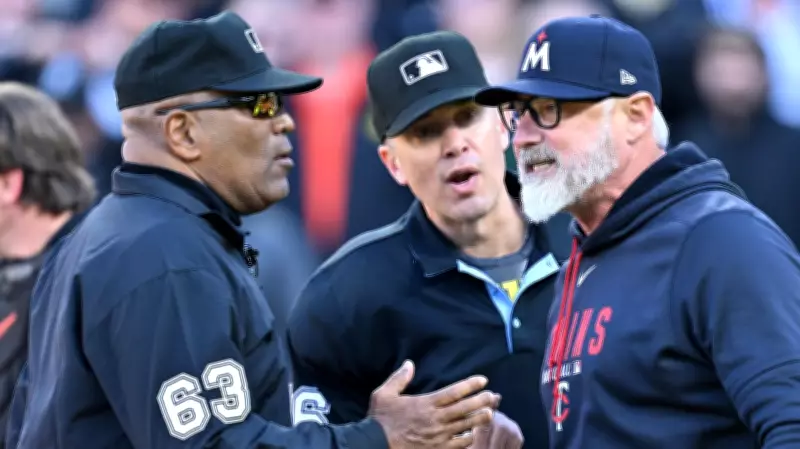
Denied what could have been a game-changing opportunity, Shelton stormed from the dugout in a furious confrontation with the umpiring crew. Broadcast footage captured the manager's intense, animated protest as he gestured vehemently toward the field.
"Derrick Shelton's been thrown out! He's arguing with the robots! You can't defeat the robots!" broadcaster Kevin Brown exclaimed as umpires decided they had endured enough of Shelton's passionate outburst.
Interestingly, Shelton clarified afterward that his anger wasn't directed at the computer's call itself, but rather at the timing of Helsley's challenge request. "I didn't think Helsley tapped his cap quick enough," Shelton explained to reporters. "Maybe he did, maybe he didn't. But I didn't feel he did." This distinction highlights how the new system introduces novel strategic elements beyond mere ball-strike accuracy.
Fan Reactions and Early ABS Data Revelations
Across social media platforms, baseball enthusiasts celebrated the unexpected drama created by the challenge system. "WE HAVE OUR FIRST EVER ABS RAGE BAIT EJECTION," one enthusiastic X user posted, while another commented, "I have no idea whether MLB realized what this was going to do to the fan experience, but they definitely hit the jackpot."
Beyond creating immediate controversy, the ABS system has already yielded fascinating data about umpire performance. Pitching analytics company Codify Baseball analyzed challenge outcomes and discovered significant generational differences. The MLB's ten oldest umpires experienced a 69% overturn rate on challenged calls, while the ten youngest umpires saw only 39% of their calls reversed. This data suggests veteran umpires may be struggling more with the strike zone precision demanded by the new technology.
The Future of Baseball Officiating
Sunday's incident represents more than just another manager ejection—it marks a pivotal moment in baseball's technological evolution. The ABS system, designed to increase accuracy and reduce human error, has now demonstrated its capacity to generate new types of disputes and strategic considerations. As teams and players adapt to this system, similar controversies will likely emerge regarding challenge protocols, timing, and implementation.
The dramatic Twins-Orioles game has provided the first real-world test of how managers, players, and umpires interact with automated officiating under high-pressure conditions. While the technology aims to create more objective outcomes, Sunday's events prove that human elements—passion, strategy, and interpretation of rules—remain firmly embedded in America's pastime.