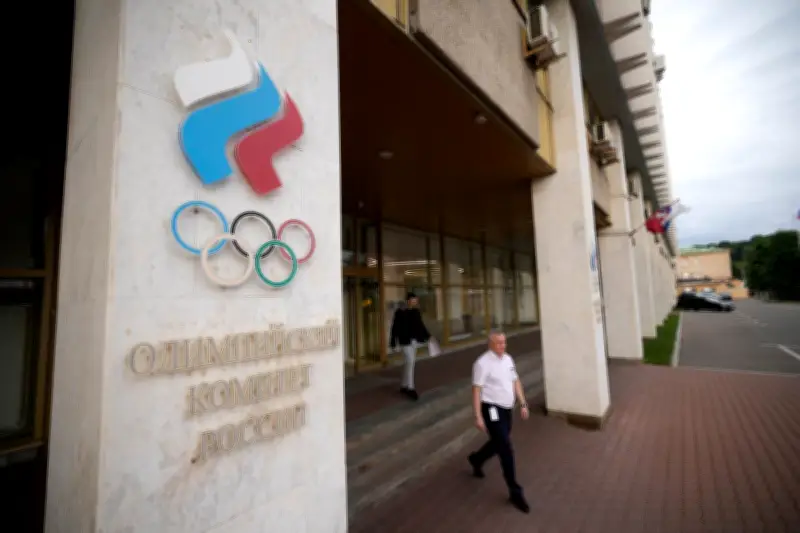
The International Olympic Committee (IOC) has taken what it calls an 'important step' by easing restrictions on Russian and Belarusian athletes, permitting them to participate in qualifying events for the 2026 Olympics as neutral competitors. The decision, announced on July 8, 2026, marks a shift from the near-total ban imposed after Russia's invasion of Ukraine in 2022.
Neutral Athletes Allowed in Qualifiers
Under the revised guidelines, athletes from Russia and Belarus who have not actively supported the war and who pass background checks can compete in Olympic qualifying events without national flags, anthems, or team uniforms. The IOC stated that the move is aimed at upholding the rights of individual athletes while maintaining the integrity of competition.
'This is not about politics; it's about ensuring that athletes who have no connection to the conflict are not unfairly penalized,' said an IOC spokesperson. The decision follows months of deliberation and consultations with international sports federations, athlete representatives, and human rights organizations.

Conditions and Criticisms
The IOC emphasized that the easing is conditional: athletes must not have been involved in any government or military actions related to the war, and they must comply with anti-doping regulations. However, the decision has drawn criticism from Ukraine and several Western nations, who argue that it normalizes Russia's presence in international sports despite ongoing hostilities.
Ukrainian officials condemned the move, saying it 'whitewashes Russia's aggression.' The IOC countered that the restrictions are still stringent, noting that no Russian or Belarusian athletes were allowed to compete in the 2024 Paris Olympics under the same neutral status, and that the current policy applies only to qualifying events, not the Games themselves.
Impact on Athletes and Sports
Russian athletes have been largely absent from international competitions since 2022, with many losing opportunities to train and compete. The IOC's decision could allow up to 200 athletes from both countries to participate in qualifiers for the 2026 Winter Olympics in Milan and Cortina d'Ampezzo, Italy. Sports such as figure skating, hockey, and biathlon are expected to be most affected.
According to the IOC, approximately 60% of Russian athletes who applied for neutral status have been approved so far. 'We want to give clean athletes a chance to pursue their dreams,' the spokesperson added. The decision also applies to Belarusian athletes, who have faced similar bans due to their country's support for Russia.
Reactions from the Sports Community
Some international federations have welcomed the move, while others remain cautious. The International Skating Union (ISU) stated it would follow IOC guidelines but would continue to monitor the situation. Athletes from other nations have expressed mixed feelings, with some supporting inclusion and others fearing a return of state-sponsored doping or political manipulation.
'We must be vigilant,' said a representative of the World Anti-Doping Agency (WADA). 'Neutral status does not exempt athletes from rigorous testing.' The IOC has pledged to maintain strong anti-doping measures and to revoke neutral status if any athlete is found to violate conditions.
Looking Ahead
The easing of restrictions is seen as a test case for the 2026 Olympics. The IOC has not yet decided whether Russian and Belarusian athletes will be allowed to compete under neutral flags at the Games themselves. A final decision is expected in early 2027, after the conclusion of qualifying events.
For now, the IOC's move represents a significant shift in the sports landscape, balancing the principles of athlete rights against geopolitical realities. As one official put it, 'This is a pragmatic step, but it is not an endorsement of the actions of their governments.'