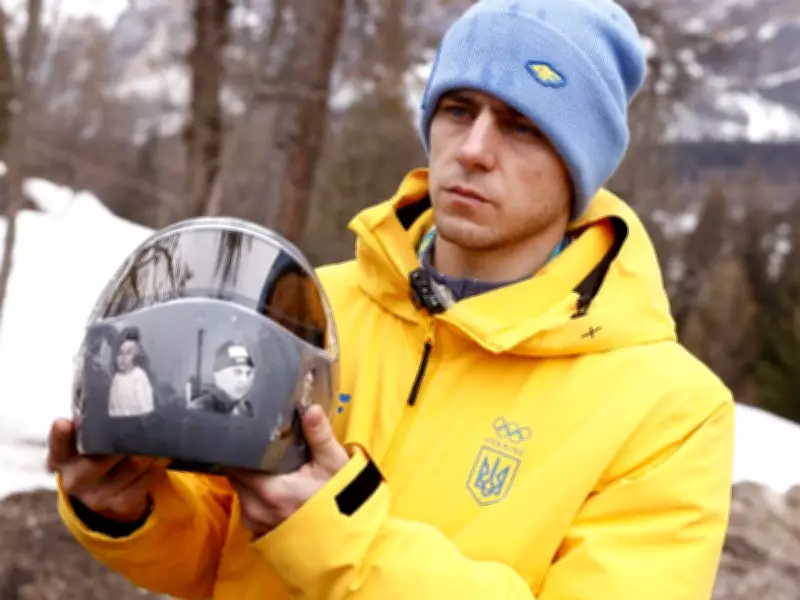
Ukrainian Skeleton Athlete Loses Olympic Appeal Over War Tribute Helmet
Vladyslav Heraskevych, the Ukrainian skeleton racer, has seen his final appeal to compete in the 2026 Winter Olympics denied by the Court of Arbitration for Sport (CAS). The decision, announced on Friday, upholds his disqualification over his refusal to remove a helmet featuring images of Ukrainian athletes killed in the war with Russia.
End of Olympic Dreams
The CAS ruled against Heraskevych's application, which challenged the International Bobsleigh & Skeleton Federation (IBSF) and the International Olympic Committee (IOC). "Looks like this train has left," Heraskevych told reporters in Milan after the hearing, expressing resignation over the outcome. His hopes for participating in the Milano-Cortina Games are now definitively extinguished.
The Controversial Helmet
Heraskevych's hand-painted 'remembrance helmet' has been a focal point of controversy at this year's Olympics. It depicts several Ukrainian athletes who have died since Russia's invasion began shortly after the 2022 Winter Games in Beijing. The IOC deemed the helmet political in nature, violating the Olympic Charter, which prohibits political statements on the field of play.

"From Day 1, I told you that I think I'm right," Heraskevych said, standing by his decision. "I don't have any regrets." He added that he never expected the helmet to spark such a significant scandal, noting that attention intensified only after the IOC's ruling.
Legal and Official Stances
CAS Secretary-General Matthieu Reeb explained the court's decision, stating that while freedom of expression is guaranteed at the Olympics, it does not extend to the competition area, which is considered a "sacred principle." International Olympic Committee president Kirsty Coventry supported the disqualification, acknowledging Heraskevych's commitment to his beliefs but emphasizing that rules must be upheld. "I think that he in some ways understood that but was very committed to his beliefs, which I can respect," Coventry said. "But sadly, it doesn't change the rules."
Political Backing and Comparisons
Ukrainian President Volodymyr Zelensky has publicly backed Heraskevych throughout the process, expressing disappointment over the decision. "Olympic movement should help stop wars, not play into the hands of aggressors," Zelensky stated, highlighting the broader geopolitical context.
Heraskevych has pointed out perceived inconsistencies in the enforcement of rules. He cited examples such as:
- Russian flags being seen at events around Milano-Cortina, despite being prohibited.
- An Italian snowboarder wearing a small Russian flag image on his helmet.
- An Israeli skeleton athlete wearing a kippah at the opening ceremony with names of victims from the 1972 Munich Games attack.
In these cases, the IOC found no violations, leading Heraskevych to criticize the decision as biased. "I think it's the wrong side of history for the IOC," he remarked, questioning the fairness and consistency of the rulings.
Broader Implications
This case underscores the ongoing tension between athletic expression and Olympic regulations, particularly in contexts of international conflict. Heraskevych's disqualification sets a precedent for how political tributes are handled in future Games, raising questions about the balance between personal beliefs and the neutrality expected in sports competitions. The denial of his appeal marks a definitive end to his Olympic aspirations, leaving a lasting impact on the sporting community and beyond.