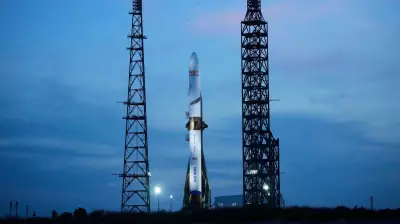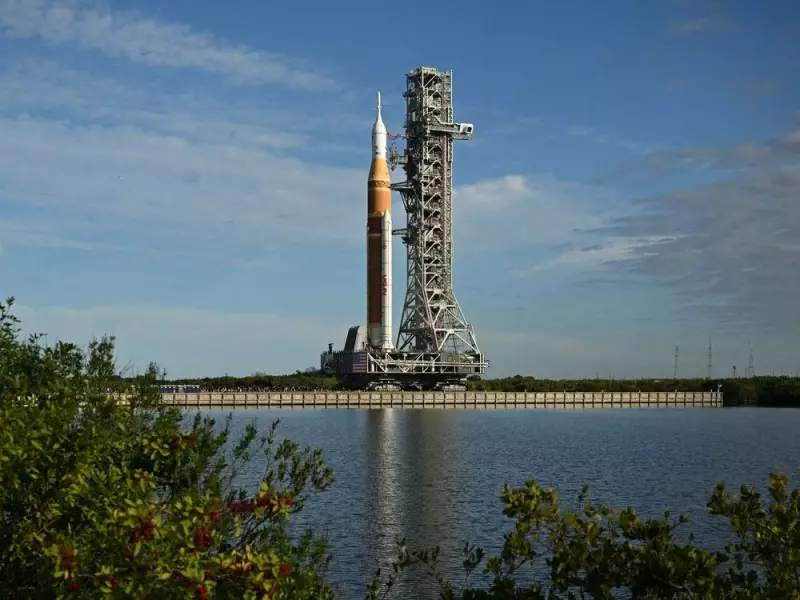
In a pivotal move for America's lunar ambitions, NASA has begun the monumental process of rolling its colossal Space Launch System (SLS) rocket and Orion spacecraft to the launchpad in Florida. This event marks a significant milestone in the escalating space race between the United States and China, both vying to establish a sustained human presence on the moon.
A 12-Hour Journey to the Pad
The rollout commenced on Saturday, January 17, 2026, at the Kennedy Space Center. The four-mile trek from the iconic Vehicle Assembly Building to Launch Pad 39B is a slow and deliberate operation, expected to take the ground team as long as 12 hours. The integrated rocket and spacecraft, built by a partnership of Boeing Co. and Lockheed Martin Corp., represent the backbone of NASA's Artemis program.
Once positioned at the pad, engineers will immediately begin a series of critical pre-flight checks. This work includes connecting ground support equipment, testing numerous hardware components, and verifying the integrity of all pad infrastructure systems to ensure readiness for the upcoming mission.

The Costly Path to Artemis II
The development of the SLS has been a long and expensive journey, spanning about a decade and a half. The program has faced well-documented delays and budget overruns, with each launch now costing taxpayers more than $4 billion. To date, the rocket has flown only once: the uncrewed Artemis I test flight in 2022, which successfully orbited the moon.
The program's future has been politically contentious. Earlier this year, President Donald Trump's budget proposed phasing out the SLS after its third flight, labeling it "grossly expensive and delayed." However, Texas Senator Ted Cruz successfully advocated for its continuation, securing $4.1 billion in new funding as part of the One Big Beautiful Bill Act signed into law in July.
Testing the Waters Before Launch
This rollout is the initial step for the Artemis II mission, which aims to send a crew of four astronauts on a approximately ten-day journey around the moon and back. While NASA originally targeted late 2024 for this flight, the launch is now scheduled for no later than April of this year.
A crucial test looms at the end of January: the "wet dress rehearsal." This practice run involves fully fueling the massive rocket while it sits on the pad, simulating countdown procedures. Charlie Blackwell-Thompson, NASA's Artemis launch director, emphasized its importance during a Friday press conference, stating, "Wet dress is the big test at the pad. That's the one to keep an eye on." A smooth rehearsal is mandatory before mission preparations can advance.
The primary goal of Artemis II is to rigorously test all of Orion's life-support and critical systems in the deep space environment. Success is essential to pave the way for Artemis III, currently planned for 2027, which will execute the first crewed lunar landing since Apollo 17 in December 1972.
The stakes are high, with both superpowers investing billions. China aims to land its first crewed mission on the moon by 2030, setting the stage for a new era of geopolitical and scientific competition far beyond Earth's atmosphere.