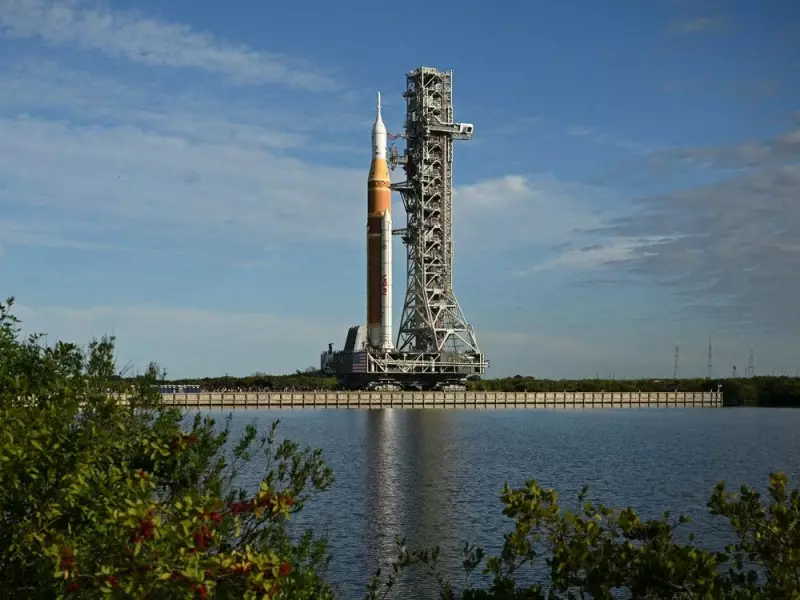
In a pivotal move for American lunar ambitions, NASA has begun rolling its colossal Space Launch System (SLS) rocket and Orion spacecraft to the launchpad in Florida. This milestone marks the official start of launch preparations for the Artemis II mission, which aims to send four astronauts on a journey around the moon.
The Long Journey to the Pad
The four-mile trek from the Vehicle Assembly Building to Launch Pad 39B at Kennedy Space Center began on Saturday, January 17, 2026. NASA estimates the slow, careful process of moving the 322-foot-tall rocket could take up to twelve hours. This rollout is the first major physical step toward launching the crewed test flight, which is now scheduled for no later than April after being delayed from an original target of late 2024.
Once positioned at the pad, teams will immediately begin connecting critical ground support equipment, testing hardware, and checking infrastructure systems. The rocket and spacecraft, developed by Boeing Co. and Lockheed Martin Corp. respectively, represent the backbone of NASA's Artemis program to return humans to the lunar surface.

A Costly and Critical Test
The upcoming Artemis II mission is a ten-day flight designed to rigorously test all of Orion's life-support systems in the deep space environment. This mission is the essential precursor to Artemis III, which plans to execute the first crewed lunar landing since Apollo 17 in December 1972, currently targeted for 2027.
The SLS program itself has been a source of congressional and budgetary debate. In development for roughly fifteen years, the rocket is significantly over budget and behind schedule, with only one prior flight—an uncrewed test around the moon in 2022. Each launch carries an estimated price tag exceeding $4 billion. Earlier in the year, the Trump administration's budget proposed phasing out the SLS after its third flight, labeling it "grossly expensive and delayed." However, Senator Ted Cruz successfully advocated for $4.1 billion in new funding, which was signed into law as part of the One Big Beautiful Bill Act in July.
The Next Hurdle: The Wet Dress Rehearsal
Following the rollout and initial pad checks, NASA's next critical test is a "wet dress rehearsal" slated for the end of January. This procedure involves fully fueling the rocket with its cryogenic propellants and running through the entire countdown sequence, stopping just before engine ignition.
"Wet dress is the big test at the pad. That's the one to keep an eye on," emphasized Charlie Blackwell-Thompson, NASA's Artemis launch director, during a press conference. A smooth rehearsal is mandatory before the agency can proceed with final launch preparations for Artemis II.
The Broader Lunar Landscape: A Race with China
This technical progress occurs within the context of a renewed, high-stakes space race. Both the United States and China are investing billions to establish a sustained human presence on the moon. Beijing has publicly stated its goal of landing Chinese astronauts on the lunar surface for the first time by 2030. NASA's Artemis program, with its ambitious timeline and international partnerships, is Washington's strategic answer to this challenge, aiming to reaffirm American leadership in deep space exploration for decades to come.