Prime Minister Mark Carney's recently announced Canada Strong Fund has lofty goals: It will help transform the economy, supercharge innovation and create good-paying jobs. It will do all that while delivering strong commercial returns and building wealth for Canadians.
Unfortunately for Canadians, there ain't no free lunch.
The challenge of dual mandates
Public investment institutions can and do generate strong, market-rate returns. We have proof of that right here at home with CPP Investments, which manages Canada Pension Plan assets. But it generates those returns through a laser-like focus on returns: not good-paying Canadian jobs, not transforming Canada, not supercharging Canadian innovation.

The proof is in the portfolio: as of its 2025 annual report, CPP Investments invested roughly $7 abroad for every $1 it invested in Canada. CPP Investments sends capital overseas for a simple reason: its job is to maximize returns for Canadian retirees, not to serve Canada's industrial policy.
The Canada Strong Fund promises both strong returns and nation-building. In practice, promising both financial returns and nation-building often means being accountable for neither. Once a project is labelled "nation-building," weak commercial discipline can be recast as public purpose. Carney may be disciplined enough to manage these risks, but the institution has to survive successors who are not.
Trans Mountain: a cautionary tale
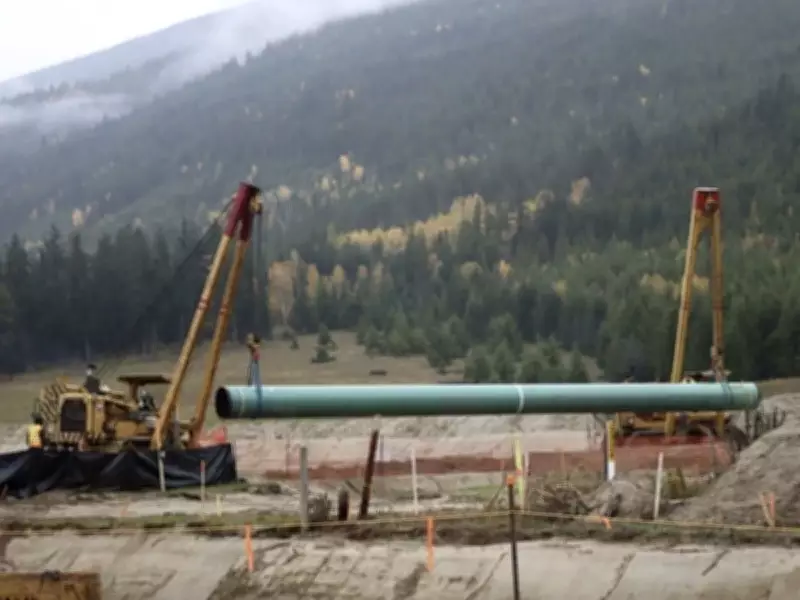
Trans Mountain is the cautionary example. In 2018, Kinder Morgan threatened to abandon the project, citing political, regulatory and construction risks. Ottawa stepped in, bought the project for $4.5 billion, and described the transaction as a "sound investment opportunity" that would offer a "solid return on investment for Canadians." At the time, the expansion was expected to cost $7.4 billion. The latest estimate is $34.2 billion. Whatever its nation-building value, it's hard to call that a great investment.
Taxpayer-backed industrial policy can do more than become a financial boondoggle; it can crowd out private capital. You wouldn't build a lemonade stand today if you thought the government might offer free lemonade next door tomorrow.
Risk of crowding out private investment
Private investors face the same problem. Why spend years developing a pipeline, mine, port or power project if a future government-backed fund will finance a competitor on softer terms, accept lower returns or absorb risks private capital can't? If managers think the state may over-invest, underprice capital or back politically preferred competitors, the Canada Strong Fund could deter private investment rather than catalyze it.
I'm not opposed to all government investment. Small- and mid-sized enterprises can face a real financing gap: many are too large or complex for standard small-business lending but too small for capital markets. That market is inefficient and fragmented, and the Crown corporation Business Development Bank of Canada (BDC) appears to play a useful role serving businesses that fall through the cracks. But multibillion-dollar pipelines are in a different financial universe from the small- and mid-sized enterprises BDC serves.