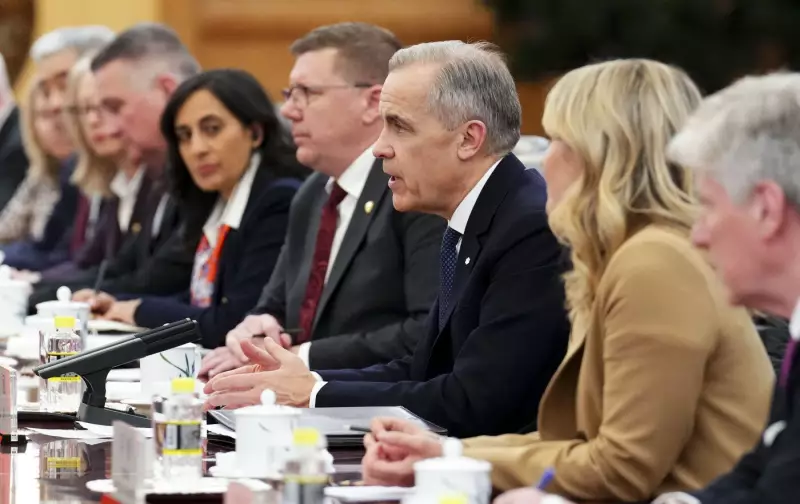
In a significant move to strengthen economic ties, Canada and China have agreed to expand cooperation across six key sectors. The agreement was forged during a bilateral meeting between Prime Minister Mark Carney and China's Premier Li Qiang at the Great Hall of the People in Beijing on Thursday, January 15, 2026.
Six Sectors Targeted for Enhanced Collaboration
The two nations have outlined a concrete plan to deepen their partnership. The agreed-upon areas for expanded cooperation include energy, mining, agriculture, green technology, financial services, and infrastructure development. This framework is designed to boost trade and investment flows between the two economies.
Officials from both countries emphasized the mutual benefits of this arrangement. For Canada, it represents an opportunity to secure stable markets for its natural resources and clean technology expertise. For China, it ensures access to critical materials and collaboration on large-scale projects.

The Notable Holdout in Discussions
Despite the broad agreement, one major area of potential cooperation was conspicuously left off the joint plan. Collaboration in the sensitive sectors of artificial intelligence (AI) and advanced semiconductor technology was a significant holdout.
Analysts suggest this omission reflects ongoing geopolitical tensions and national security concerns, particularly from the Canadian side. The Canadian government has been cautious about deepening technological interdependence in fields with dual-use (civilian and military) applications.
Implications for the Bilateral Relationship
This meeting and the resulting plan mark a deliberate step to stabilize and grow the Canada-China relationship, which has faced strains in recent years. By focusing on tangible economic sectors, both leaders aim to build a more predictable and fruitful partnership.
The energy cooperation component is particularly noteworthy, as it includes dialogue on renewable energy projects and sustainable resource management. This aligns with both countries' stated climate goals, though it will likely be watched closely by critics concerned about environmental standards and geopolitical leverage.
The success of this expanded cooperation will depend on implementation and the ability of both nations to navigate the complex geopolitical landscape that made the AI sector a bridge too far, for now.