The United States government has publicly criticized Canada's recent decision to allow the import of Chinese-made electric vehicles under a new trade arrangement, labeling the move as "problematic." The rebuke highlights growing tensions in North American trade policy and positions Canada's agreement with China as a potential flashpoint with its southern neighbor.
The Landmark Agreement and U.S. Objections
This diplomatic friction stems from a "landmark" tariff-quota deal reached between the administration of Prime Minister Mark Carney and China, specifically concerning electric vehicles (EVs) and canola. The agreement, announced recently, involves significantly reduced tariffs on these goods, facilitating greater market access. The Saskatchewan government hailed the deal as "very good news," indicating domestic support from agricultural and potentially industrial sectors.
However, the U.S. administration has taken a starkly different view. American officials contend that allowing more Chinese EVs into the Canadian market undermines shared economic and security interests, and could disadvantage American automakers. The criticism was reported on January 16, 2026, casting a shadow over what Ottawa had framed as a positive economic development.

Broader Political and Economic Context
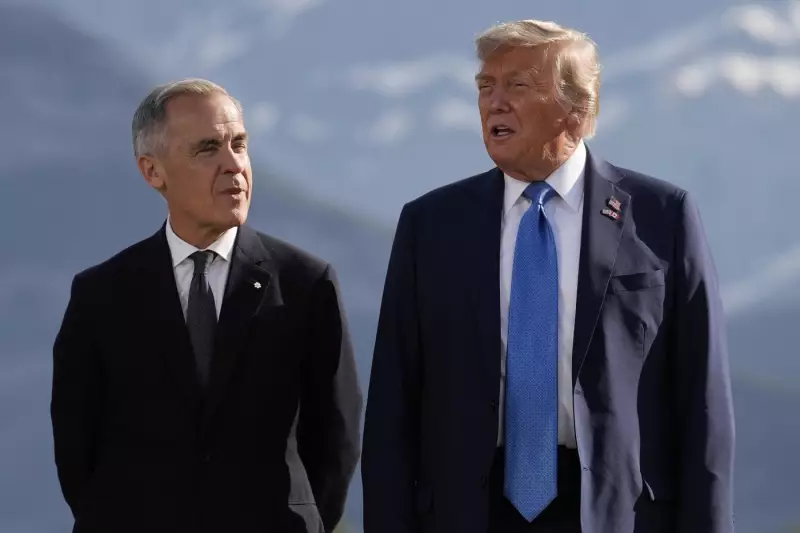
The dispute occurs against a complex geopolitical backdrop. Prime Minister Carney and U.S. President Donald Trump were photographed together at the G7 Summit in Kananaskis, Canada, in June 2025, but this latest trade issue suggests underlying policy divergences. Furthermore, Carney has confirmed speaking with China's President Xi Jinping about Greenland, indicating Canada's active and independent engagement on files that intersect with U.S. strategic interests.
Domestically, the deal has also faced criticism. Opposition voices, like those from Ford, have slammed Carney's arrangement with China, with one headline capturing the sentiment as: 'Fix this mess': Ford slams Carney’s deal with China on EVs. This illustrates the contentious nature of the policy within Canada itself, pitting proponents of expanded trade against those concerned about economic sovereignty and alignment with traditional allies.
Implications for North American Trade Relations
The U.S. characterization of Canada's policy as problematic signals a significant diplomatic challenge. It places the Canadian government in a delicate position of balancing its desire for diversified trade partnerships, particularly with the world's largest EV market and manufacturer, against maintaining a smooth and integrated economic relationship with the United States.
The core of the issue lies in the tariff-quota system negotiated with China. By lowering barriers for Chinese EVs, Canada may be seen as deviating from a coordinated North American approach to dealing with China's competitive industrial output, especially in the critical green technology sector. This could lead to further trade discussions, or even disputes, between Ottawa and Washington in the coming months.
As the global auto industry rapidly electrifies, trade policies surrounding electric vehicles are becoming a primary battleground for economic influence. Canada's deal with China, and the sharp U.S. reaction to it, marks a pivotal moment in defining how closely the two nations will align their strategies in this new industrial landscape.