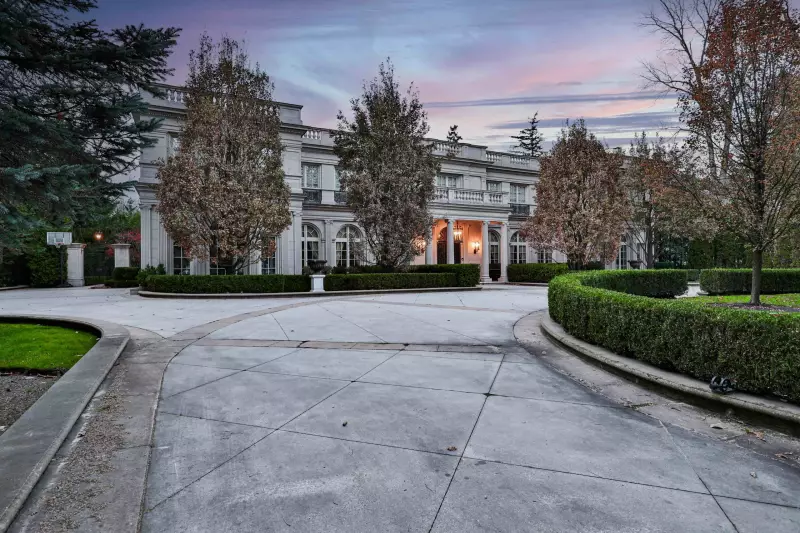
Canada's high-end housing landscape underwent a significant transformation in 2025, moving away from a unified national trend toward a more fragmented, region-by-region reality. According to the newly released Engel & Völkers 2025 Year-End Canadian Luxury Real Estate Market Report, luxury property prices remained stable across the country despite a clear divergence in sales activity between major metropolitan centres.
A National Picture of Stability Amid Regional Shifts
The overarching theme from the year's data is one of disciplined price resilience. Average luxury home prices held steady nationwide, a phenomenon the report attributes to selective buyer behaviour and a constrained supply of premium properties. However, this stability masked sharply different stories on the ground. Sales volumes declined in Toronto and Vancouver, two traditional powerhouses, while markets in Ottawa, Montréal, and Halifax saw increased activity.
Stuart Siegel, President & CEO of Engel & Völkers Americas, characterized 2025 as a year of deliberate change. "2025 marked a shift from momentum-driven buying to more deliberate decision-making," Siegel stated. "Buyers were highly selective, but they remained willing to pay for quality, location, and long-term livability. That discipline is what kept prices stable, even as activity diverged by market."

Toronto's "Precision Market" and the Impact of Policy
The Toronto market exemplified the new era of scrutiny. Engel & Völkers describes the city as a "precision market," where homes still transact but buyers meticulously evaluate price, taxes, and carrying costs. The city's real estate sector navigated a year of recalibration, a shift in buyer psychology, and a dramatic contraction in new listings.
Notably, the firm's own key shops in Toronto outperformed the broader market, with sales rising 15% even as Greater Toronto Area-wide sales fell by 11.2%. However, the market segmented further. Sales in the $1–$1.99 million range dropped by 15%, though average prices held at $1.5 million. Listings in that segment plummeted by 44% year-over-year.
Policy changes played a decisive role. The report highlights that Toronto's expanded Municipal Land Transfer Tax (MLTT), with higher marginal rates for purchases over $3 million, significantly increased closing costs at the market's peak. This, combined with the federal extension of the Prohibition on the Purchase of Residential Property by Non-Canadians Act to 2027, cooled activity in the $2 million-plus categories. The report notes this was not due to a lack of wealth but rather "strategic wait-and-see behaviour" from buyers weighing markets with lower transaction costs.
The Rise of Local Fundamentals and Selective Buying
The report concludes that Canada's luxury markets are increasingly driven by local conditions rather than national sentiment. Performance now more closely reflects local fundamentals like employment stability, housing supply, and lifestyle appeal. This divergence signals a broader transition toward what the report calls "precision over speculation." Buyers are prioritizing well-located, turnkey homes over discretionary purchases, and advisors with deep local knowledge have become crucial to facilitating transactions.
In high-demand Toronto neighbourhoods such as Riverdale, the Beaches, Leaside, and the Avenue Road and Lawrence area, properties continued to outperform the broader market while maintaining strong price retention. The national takeaway is clear: the era of a single, soaring Canadian luxury market is over, replaced by a patchwork of markets where stability is maintained through selectivity and local expertise.