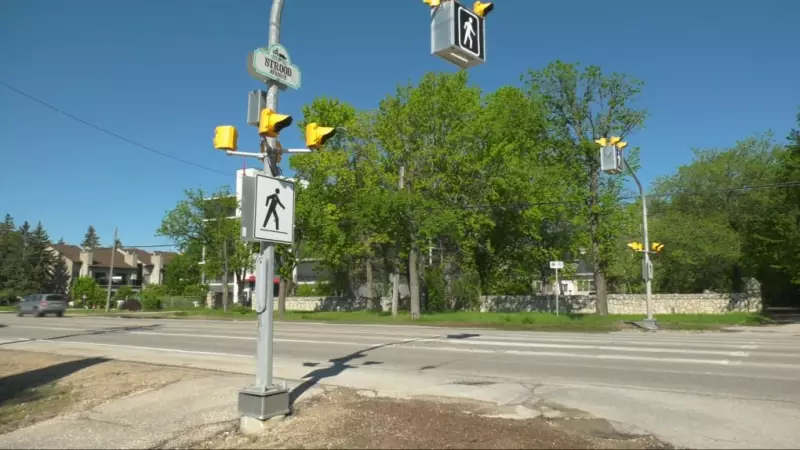
The City of Winnipeg is taking steps to enhance pedestrian safety by planning an expansion of its leading pedestrian interval (LPI) system, commonly known as the pedestrian head-start, at crosswalks across the municipality. This initiative aims to give people on foot a crucial few seconds to enter an intersection before vehicle traffic receives a green light, significantly improving visibility and reducing conflicts.
How the Head-Start System Protects Pedestrians
The operational model is straightforward yet effective. At equipped intersections, the walk signal illuminates for pedestrians three to seven seconds before drivers get a green light. This brief window allows individuals crossing the street to establish themselves in the crosswalk, making them more visible to motorists who are turning left or right. This proven safety measure is designed to mitigate right-turn and left-turn collisions, which are common scenarios for pedestrian-vehicle incidents.
The push for expansion follows a period of evaluation and growing public awareness of pedestrian safety needs. City traffic engineers have been monitoring the performance of existing LPI locations, and the data has supported a broader rollout. The program's expansion is part of a continued commitment to Vision Zero principles, which aim to eliminate all traffic fatalities and severe injuries.

City's Strategic Approach and Implementation Timeline
While the specific number of new intersections to receive the head-start treatment in 2026 is still being finalized, city officials have confirmed that identifying and prioritizing high-priority locations is a key focus. Criteria for selection typically include intersections with higher pedestrian volumes, a history of collisions, or those near key community hubs like schools, senior centers, and transit stations.
The implementation involves updating traffic signal timing software and, in some cases, hardware at selected intersections. The process is considered a cost-effective safety upgrade compared to major infrastructure changes, offering a high return on investment in terms of injury prevention. Public communication campaigns are expected to accompany the expansion to educate both drivers and pedestrians on how the system works and its benefits.
A Move Toward a Safer Urban Environment
This planned expansion reflects a broader shift in urban planning, prioritizing vulnerable road users. Cities across Canada and North America have been adopting similar measures as part of comprehensive road safety strategies. For Winnipeg residents, the change means a tangible step toward more walkable and safer neighborhoods.
The decision underscores the city's proactive approach to using data-driven engineering solutions to address public safety concerns. As the plans develop throughout 2026, residents can anticipate announcements regarding which intersections will be upgraded, with the goal of creating a more protective environment for everyone who walks in Winnipeg.