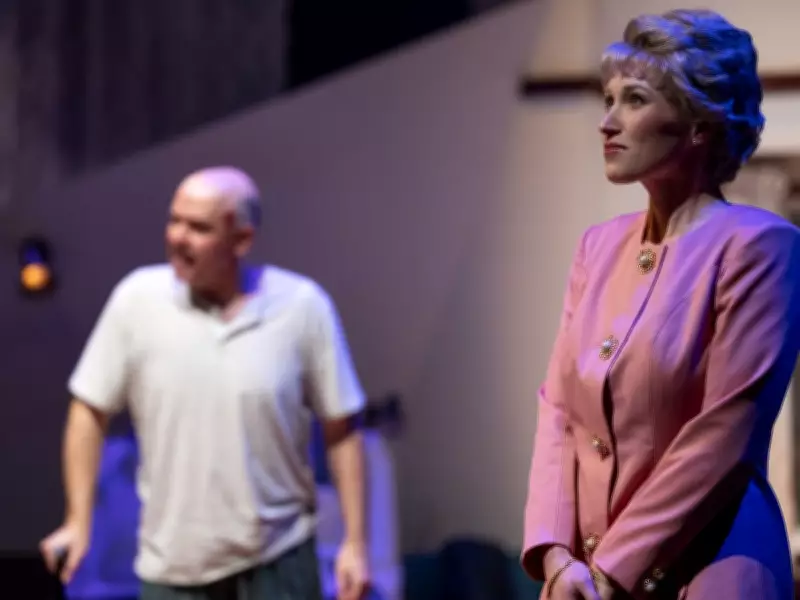
Casey and Diana Brings Princess' Historic AIDS Hospice Visit to Edmonton Stage
Playwright Nick Green masterfully explores the delicate interplay of humor, grief, and stigma during the height of the AIDS crisis in his compelling new production, Casey and Diana. The play draws direct inspiration from Princess Diana's groundbreaking 1991 visit to Toronto's Casey House hospice, an event that challenged societal perceptions about HIV/AIDS during a period of widespread fear and misunderstanding.
A Play That Balances Laughter and Loss
"Without sounding immodest, what a lot of people comment on when they leave is that they're surprised by how funny the show is," says Green from his Toronto home. The Vancouver-born playwright reveals that audiences frequently express astonishment at the production's unexpected humor, despite its serious subject matter. "There's a line in it that goes 'you have to laugh to keep from dying,'" Green notes, highlighting the dark gallows humor that permeates the narrative.
This sentiment proves particularly appropriate given the play's setting and historical context. Casey and Diana unfolds within Toronto's Casey House, a hospice established in 1988 by journalist June Callwood specifically to care for individuals living with or at risk of HIV/AIDS. The action centers around late October 1991, when Princess Diana's scheduled visit creates palpable anticipation among both residents and staff members.

Princess Diana's Transformative Gesture
While some might consider this a small moment during a profoundly difficult period, Green emphasizes its monumental significance. During the early 1990s, HIV/AIDS carried tremendous stigma, making Diana's deliberate decision to shake patients' hands without wearing gloves a powerful symbolic act. Even more impactful was her genuine engagement with Casey House residents—sitting closely beside them, listening attentively to their stories, and treating them with unprecedented dignity.
"You could call it a small moment in a sad time, but this was actually very big," Green explains. "In the early '90s there was still a great deal of stigma surrounding the disease, so when Diana made a point of shaking hands with patients without gloves it was notable. Even more notable was the way she treated the residents of Casey House, sitting closely, taking time to listen to them."
The Weight of Historical Responsibility
Green acknowledges feeling significant pressure while researching and writing the production. "I interviewed a lot of people who had personal connections to this story, and people who have given their lives to supporting people with HIV and AIDS, as well as people who work in palliative care spaces," he shares. "So yes, it was very emotional. There are people still around who lived it, and people who lost loved ones during that time. That's a big responsibility."
The playwright further recognizes the additional challenge of handling Princess Diana's complex legacy. "I'm taking on the legacy of Princess Diana, and people have a lot of opinions about her. Some people are very protective. Some people are very critical. Some people are going to come to the theater ready to talk about the ways that she's not being accurately depicted. I spent a lot of time with my forehead on my desk feeling very worried about letting a number of people down."
Personal Connections to the Crisis
Although Green was relatively young in 1991 and only peripherally aware of Princess Diana at the time, HIV/AIDS cast a long shadow over his life as a queer person coming of age during that decade. While he possesses no conscious memory of the princess's specific visit to Casey House, the surrounding historical context profoundly influenced his personal development and artistic vision.
This connection fueled Green's passionate commitment to creating theatrical works that reflect Canadian queer experiences. "These are the things that set my queer heart a-flutter," he confesses, noting that while numerous American stories from the LGBTQ+ community exist, Canada possesses its own distinct identity and history worth exploring.

From Research to Stage Production
The concept for Casey and Diana emerged while Green was researching another play titled Body Politic, developed through a partnership with the Stratford Festival beginning in 2018. The pandemic-era workshops provided unexpected insights into how fear and uncertainty can overwhelm individuals—perfect thematic material for the underlying currents flowing through Casey and Diana.
Now playing at Edmonton's Citadel Theatre through April 26, the production features performances by Nathan Cuckow and Emily Howard in Albert a Theatre Projects' staging. The play represents a significant contribution to both Canadian theater and the ongoing cultural conversation about HIV/AIDS, stigma, and the enduring impact of Princess Diana's compassionate activism during one of modern history's most challenging health crises.