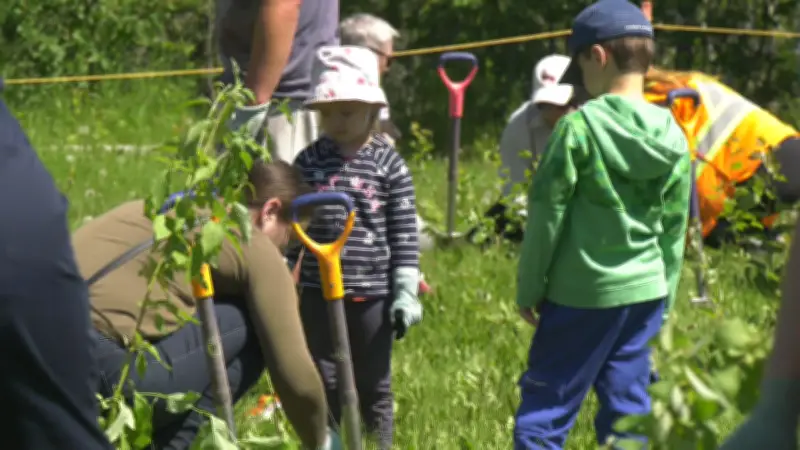
Hundreds of volunteers gathered in Edmonton's river valley on July 4, 2026, to plant trees and shrubs as part of a large-scale effort to expand urban forests. The event, focused on the Rat Creek area, aimed to enhance green spaces and improve ecological resilience in the city.
Mass tree-planting effort draws community support
Organized by local environmental groups, the planting session saw participants from across Edmonton contributing to the reforestation of the river valley. Volunteers worked in teams to dig holes, place saplings, and mulch around newly planted trees and shrubs. The initiative is part of a broader city plan to increase tree canopy cover and combat urban heat island effects.
According to the City of Edmonton, the event targeted the planting of over 1,000 native species, including poplar, spruce, and willow, which are well-suited to the local climate and soil conditions. The trees will help stabilize riverbanks, improve air quality, and provide habitat for wildlife.

Long-term benefits for Edmonton's environment
Urban forests play a crucial role in mitigating climate change impacts, such as reducing stormwater runoff and lowering temperatures during heat waves. Edmonton's river valley, one of the largest urban park systems in North America, benefits from such volunteer-driven restoration projects.
“This is about giving back to our community and ensuring future generations can enjoy a greener city,” said a volunteer coordinator from the Edmonton Urban Forest Initiative. The group has been organizing similar events since 2020, with participation steadily growing each year.
Part of a larger sustainability push
The tree-planting effort aligns with Edmonton's Climate Resilience Strategy, which aims to plant 2 million trees by 2030. The city has already planted over 500,000 trees since the strategy's launch in 2021, with volunteers contributing significantly to the progress.
Local residents expressed enthusiasm for the project. “It's amazing to see so many people come together for the environment,” said one volunteer. The event also included educational stations where participants learned about native plants and proper planting techniques.