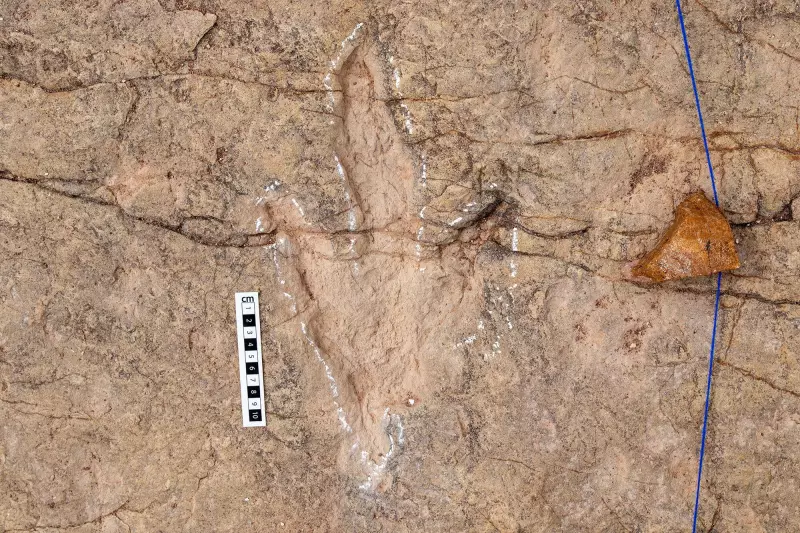
Paleontologists have made a staggering discovery in South America, officially documenting more than 16,000 individual dinosaur footprints at a single location. This find solidifies the site's status as the most extensive dinosaur tracksite on the planet.
A Prehistoric Landscape Preserved
The monumental discovery was made at the Carreras Pampas tracksite in Bolivia. The research, highlighted in a report from December 2025, reveals an incredibly dense concentration of fossilized tracks. The sheer volume of footprints provides an unprecedented snapshot of dinosaur activity from millions of years ago.
Among the most prominent prints are those left by theropods, a group of bipedal, meat-eating dinosaurs easily identified by their characteristic three-toed feet. The preservation of these tracks allows scientists to study the behavior and movement patterns of these ancient predators in remarkable detail.

Unlocking Secrets of the Ancient Past
The documentation of over 16,000 footprints is not merely about counting impressions. Each track tells a story. Researchers can analyze stride length, direction, and depth to reconstruct scenes from the Cretaceous period. This data helps answer questions about dinosaur social behavior, herd movement, and the ancient environment of the region.
The scale of the Carreras Pampas site surpasses all other known tracksites globally. This density suggests the area was a major thoroughfare or habitat for a diverse population of dinosaurs, offering a unique time capsule of prehistoric life.
Implications for Future Research
This landmark documentation, completed by a team of dedicated scientists, opens new doors for paleontological study. The site is now a critical benchmark for understanding dinosaur biodiversity and ecosystem dynamics. Future research will likely focus on identifying other dinosaur species present at the site and using advanced imaging technology to uncover even more subtle traces of ancient life.
The discovery underscores the importance of continued exploration and preservation of fossil sites around the world. Each new find, like the one in Bolivia, adds a crucial piece to the complex puzzle of life on Earth long before humans.